Monday, August 17, 2015

News Article: HKTV series “Night Shift” -- new style HK television series

HKTV's second to last in-house produced series Night Shift will premiere on Wednesday (8/19).  I've actually been looking forward to this series ever since I read about the filming of it 2 years ago!  It's been a long wait, but based on everything that I've read as well as the trailer clips and other behind the scenes clips, I feel that this series will be a worthwhile watch.  Of course, the sad part is that this also means we are one series closer to 'the end' of HKTV (though to be honest, it pisses me off more than saddens me, but I'll save that rant for another post).  

The below article came out today from Mingpao in anticipation of Night Shift's premiere -- it's a nicely written article / short interview of the creative minds behind the series:  Jimmy Luk and Alex Pau (yes, that's the same team that produced To Be or Not To Be, which is one of my favorite HKTV series so far).  I've also included a link to the 'documentary clip' that the writer mentioned in the article -- I actually saw the clip on HKTV's Facebook a couple days ago and posted it up on AF....here's the 'blurb' I wrote about it (paraphrase of what HKTV put on their FB post):

As a prelude to next week's premiere, HKTV posted the following clip on their Facebook page.  This is a special "documentary" clip that one of the professors and her student at Chinese University in HK put together documenting the last 2 weeks of filming Night Shift.  According to the post, when the government made the announcement denying HKTV a license back in October 2013, Night Shift was in the middle of filming and was only 70% completed.  Even after the announcement, the production team decided to finish filming anyway and this clip not only bears witness to how everyone felt at that time, it also shows the unity of the team and how much fire and passion they still had despite the imminent disbanding of the team....


The article is relatively short compared to MP's other interviews, but still a good article nonetheless.

Enjoy!

*************************************************************

HKTV series “Night Shift”:  New style HK television series

Source:  Mingpao

Translation:  llwy12

Article originally published August 17, 2015


Sincere.  For HKTV, that’s not a word that merely gets spoken – rather, they put that word into action through their productions.  A television series produced with ‘sincerity’ is one that will definitely be felt by discerning audiences.  

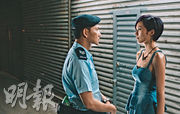
As the second to last of HKTV’s series to air, the ‘sincerity’ of the series Night Shift () can already be felt even prior to its broadcast.  In October 2013, when the government’s decision to deny HKTV a license came down, Night Shift was still in the middle of filming – faced with the possibility that the series might never see the light of day, plus most of the production team members were on the list of employees to be laid off the next day, the group collectively decided that they still wanted to finish filming the series.  Tomorrow (8/19), two years after it finished filming, Night Shift will finally get to face audiences.

Earlier, there was a short 7-minute clip posted on the Internet that documented the series’ last 2 weeks of filming.  Watching the clip, the part that moved viewers the most was when Alan Luk (陸駿) expressed during an interview segment that he felt the cast and crew of this series were like the orchestral band in the movie Titanic – even during the last moments of the ship sinking, they insisted on finishing their very last performance.  For those who participated in the series, this was not merely a ‘project’ that they finish and move on to the next one -- rather, for everyone involved this was a ‘work of art’ in which they invested a lot of blood, sweat, and tears.

Three main story arcs

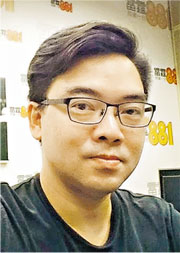
Interviewed for this article, Night Shift’s chief director Jimmy Luk (陸天) and script supervisor Alex Pau (鮑偉) revealed that the concept for the series actually came from American TV series Third Watch, a story about people who worked at night.  The 3 main story arcs revolve around the West Kowloon district’s E.U. team (衝鋒) headed by Frankie Lam (林文), the underworld triad led by Philip Keung (姜皓), and a group of young women, led by Kathy Yuen (), who frequent seedy night arenas in the hopes of making a quick buck.  Within these 3 main arcs, there are many sub-story arcs that involve a vendor selling fruit at his stand, a vegetable street market, a trash collector, an ambulance, and even a ridiculous murder case that occurs at a midnight fair.  Jimmy Luk expressed:  “Each sub-story arc will take up anywhere from ½ to 1 episode and will be interwoven throughout the 3 main story arcs.  Because of this, audiences may feel that the plot is bit ‘scattered’, as the story will jump from one occupation to another – this is actually done on purpose, as the main focus is really on ‘night-time’.  Things that people may not be willing to say or do during the day, all is let loose at night, people’s true sentiments are revealed, and the dark side of society is brought out.”


Laid off workers continue to participate in the series

Helmed by the same production team as HKTV’s earlier hit series To Be or Not To Be (來生不做香港), Night Shift marks the second collaboration between director Jimmy Luk and scriptwriter Alex Pau.  Recounting that fateful day in October 2013 when the government’s decision to deny HKTV a free-to-air TV license came down, Jimmy Luk revealed that his boss Ricky Wong (王維) called him to his office and told him that he was planning on laying off 200 people the very next day.  Given the circumstances, Jimmy was asked whether he wanted to continue filming the series.  As someone who believed in finishing what was started, plus so many people had put their hearts and souls into the production, Jimmy did not hesitate in telling Ricky Wong that he wanted to continue filming the series -- with that, all of the workers who were already laid off immediately returned on a ‘free-lance’ basis to finish the production.  The rare chance to work together again and the determination to ‘finish what they started’ united the team together – morale was especially high and the ‘fire’ in their hearts burned stronger ever.  Jimmy expressed that working for HKTV was the most enjoyable experience of his career, as he got the chance to feel what it meant to truly have ‘complete creative freedom’, which is a concept virtually unheard of in the HK television industry.  Without hesitation, Jimmy stated, “If one day Ricky Wong is issued a license and he asks me to go back and work for him, I would do it in a heartbeat!”

With Night Shift being scriptwriter Alex Pau’s very last collaboration with HKTV, he states that instead of feeling sad at having to leave the company, he decided to approach it with a heart of gratitude that he got the chance to explore different genres and filming methods at HKTV.  “The concept for Night Shift came about after Ricky Wong declared that he wanted to take an ‘American series approach’ with all of his productions.  This entirely ‘new’ style of filming was rare in the HK television industry and through it, we hoped to show audiences that it IS possible for HK production teams to film series this way.  Actually, I need to specially thank director Jimmy Luk – at that time, Ricky Wong was very ambitious and upped the ante by having all the script supervisors ‘sell’ their story concepts to the group and gave the chief directors complete authority on whether they liked the stories enough to film.  Some of the story concepts were actually rejected by the directors, so you can imagine the pressure that us script supervisors felt.  During that presentation, when I brought up the premise for Night Shift, Jimmy Luk was the first one to raise his hand and say ‘I really want to film that!’  To this day, I am still extremely grateful for his recognition!”

Filmed entirely at night, no ‘main leads’ in the series

Alex Pau further expressed, “I would also like to thank the artists who participated in the series – it was hard enough that they all had to re-arrange their schedules for a month to film entirely at night, they also had to deal with a neurotic script supervisor such as myself!   This series is unique in that everyone’s screen time is scattered and uneven and the main story line is fuzzy – to be honest, none of the artists in the series can be considered ‘leads’.  This is an entirely new format and also a different way of storytelling that left the artists a bit perplexed when filming, but they persevered anyway.  Lastly, I would like to thank the entire production team for selflessly giving so much of their time and effort to help me fulfill this crazy story concept!” 

Sunday, August 16, 2015

TVB series recommendations from the years 1982 and 1983

This is part 2 in a multi-part series of posts about TVB series from the 80s era that I recommend.  Please read this Introductory post for details about how this came about:  TVB series recommendations from the years 1980 and 1981.

** Note:  I used Wikipedia in conjunction with TVB’s website and a few other sources to gather the information for each series.  Note that the cast lists are not all-inclusive and the English song titles are rough translations.**


Here’s my list of recommendations from 1982 and 1983 (remaining years to follow in subsequent posts):


TVB series recommendations from the years 1980 and 1981

Recently, there has been a lot of talk about ‘the good old days’ of TVB and the ‘golden era’ of the HK television industry (which in my opinion is represented by the early 80s to mid-90s, though officially that era includes the late 70s as well as the late 90s).   Since I grew up in the 80s era surrounded by TVB series (our entire household consisted of TVB fans back then), it’s probably not surprising that I’ve seen so many of the series from that era.   Some of the series I watched back in the 80s when I was too young to understand what the series were about, whereas others I watched (or re-watched in some cases) later on when I was older.  Regardless of when I watched though, the TV series from those days (80s and 90s) will always be TVB’s best productions in my book.  Yes, of course there were ‘good’ series as well as ‘bad’ series back then, as that is inevitable no matter which era – the difference is that the ratio of ‘good’ series to ‘bad’ series back then was way higher than it is now (the ‘rough estimate example’ I always use is that back in those days, I would venture to say that at least half or more of the series released in a year were 'good' and/or worth watching from beginning to end, while nowadays, I would be hard-pressed to find even a handful that I would consider ‘good’ or that I'm able to tolerate enough to sit through from beginning to end -- THAT’s how bad it’s gotten!) 

We all know that TVB’s series have gone downhill the past decade or so (actually longer than that depending on who you ask – my personal opinion is that their series have been going downhill for the past 15 years).  Well, with TVB’s series hitting an ‘all-time low’ in the past 2 to 3 years, there has been an increased interest on the part of many audiences to watch/re-watch the older TVB classics from the 80s/90s era.  Unfortunately, many of the series from those eras (especially the 80s era) are very hard to find nowadays, as technology was not as advanced back then (there was none of this ‘streaming on the internet’ stuff that we have now) and TVB has been very ‘stingy’ about releasing many of the older classics on DVD over the years.  Nowadays, pretty much the only way to watch these older classics is to wait for TVB to re-broadcast those series on their TV channels (i.e. during midnight timeslot) or, if you live in Hong Kong, you can go on TVB’s website to watch (TVB launched their GOTV service about 2 years ago where, if you have a paid subscription, you can have access to their entire ‘vault’ of series produced from the 1970s to now, so fans can re-watch to their heart’s content…but again, the caveat is that this service is limited to HK region ONLY).

Since I’ve been asked several times over the years for recommendations of TVB series to watch from those eras, I decided to finally compile the lists and post on my blog (80s era only for now).  For the record, these lists only consist of series that I’ve watched and therefore are absolutely NOT all-inclusive.  Also, another ‘disclaimer’ of sorts: just because certain series are on the list, doesn't mean they are 'good' series nor are they necessarily my favorites -- some of the series I included because I may feel that they are worth a watch purely from a ‘historical’ (TVB history) perspective, regardless of whether I personally liked the series or not.  Some of the series may sound familiar, as most of the popular classics from that era are included, as are some of the more obscure works that some audiences may never have heard of.  Lastly, I didn’t have time to include plot synopsis of each series, so I would recommend Googling for that information if needed.  I also didn’t put down any comments or notes about why I recommend the series or what my thoughts are/were on each series (mostly because I don’t have time for that but also in some cases, I don’t remember enough about the series to give any type of detailed analysis).  With that said however, I don’t mind giving brief thoughts on particular series or helping with questions/research on certain individual ones if asked – I just didn't have time to do that on all of them for this post.

** Note:  I used Wikipedia in conjunction with TVB’s website and a few other sources to gather the information for each series.  Note that the cast lists are not all-inclusive and the English song titles are rough translations.**


Here’s my list of recommendations from 1980 and 1981 (remaining years to follow in subsequent posts):


Monday, August 10, 2015

Ricky Wong's editorial on HKTV series "Hidden Faces"

I’m currently watching HKTV’s medical drama Hidden Faces.  Unlike traditional HK medical dramas, this one from HKTV is a very sincere, slice-of-life portrayal of ordinary events that occur at a franchised medical clinic.  The 3 main doctors in the series are played by John Chiang (family medicine), Frankie Lam (plastic surgery), and Wilson Tsui (Obstetrics/Gynecology) – all 3 characters have markedly different personalities and both good as well as not-so-good sides to them (in other words, they are very much flawed, which makes them all the more realistic).  I don’t want to comment too much on the series, since I haven’t finished watching it yet – but one thing I will say is that I’m 12 episodes into the series (episode 13 airs today) and am enjoying it immensely!   Sure, the series is not fast-paced and action-packed like The Menu was and because of that I’m sure the series won’t generate the same type of hype and attention that series did (with that said though, recent media reports claim that HKTV’s ‘ratings’ slumped drastically after The Menu but now with the airing of Hidden Faces, the ‘ratings’ have gone back up, albeit not to the level it did when The Menu aired)….but I’m ok with this because to be honest, I wasn’t expecting a lot of action given the genre of the series.  From what I’ve seen so far, I feel that Hidden Faces is more along the lines of To Be or Not to Be (minus the controversial societal/political theme) – it’s a slow-paced but meaningful series that doesn’t take sides (one of the things I loved about TBONTB)….instead, it leads audiences to self-reflect and ponder various aspects of life and through that, arrive at our own conclusions about right and wrong, moral and immoral.  (In other words, the series ‘tells it like it is’ and, as an audience, you get what means the most to you from it, which will likely be different from the next person).

Anyway, I digress….the purpose of this post is actually to share one of the ‘articles’ that Ricky Wong wrote as part of his daily column for HK newspaper Sky Post.   For this past Thursday’s column, he decided to write about  Hidden Faces -- after reading his editorial, I feel it is a good supplemental read for those of us chasing the series (though I also recommend checking out HKTV’s Facebook page as well, since they usually post up quite a bit of ‘inside’ info about the series that are currently airing).  The first part of the article about the significance of the series’ Chinese title was actually already explained on Facebook last week – Ricky Wong basically extends the explanation further with his post and correlates it to his thoughts on life.  It’s a very brief but interesting read….

.******

Losing One’s Way in Life
8/7/2015

**Editorial written by Ricky Wong

Source: Skypost

Translation: llwy12

The other day, a netizen left a message on HKTV’s Facebook page asking about the significance of the ‘three faces’ (三面) in the series Hidden Face’s (三面形醫) Chinese title.  The scriptwriter responded with the explanation that the ‘three faces’ refers to each person having 3 different sides (faces) to them from a mental/psychological perspective. The first side (face) is ‘one’s true self’ – raw, unassuming, not influenced by outside forces, it’s who you truly are deep inside.  The second side (face) is ‘how other people see oneself’ – basically, it’s how other people view you based on various factors.  The third side (face) is ‘the self that exists for others’ – the side that we cover up, pretend, change for other people’s sake.

After enduring so many setbacks in life, I now have a better understanding of what it means to ‘take things in stride’ – by experiencing and learning, I am slowly starting to grasp its significance and realize how important it is to have a heart of gratitude.  In the series, there is a line of dialogue that goes like this:  “What you possess today, others may never be able to possess in their entire lifetimes.  If you’re still not satisfied [with all you already have], there is no surgery in the world that can help you.”   The characters in the series think that going through plastic surgery will help them gain even more in life, forgetting that they should actually be happy with what they already have.  This is how it works in real life as well:  you may feel that your life currently is not as good as someone else’s, but in reality, it is already better than what many people experience in their entire lifetimes.  Since that’s the case, why spend so much of your time ‘existing’ for others and chasing after other people’s ideals?  If you continue to spend your life blindly pursuing others, you will only lose your way in the end.

Sunday, July 19, 2015

Mingpao Weekly Interview with Samuel Kwok: Young at Heart

I came across this interview with veteran actor Samuel Kwok and enjoyed it tremendously, so really wanted to share it.  

Not surprisingly, Samuel has always been on my list of favorite veteran 'green leaf' actors --  I've actually 'followed' Samuel's career for a long time, as he's one of my family's favorite actors as well. For me, Samuel is another one of those actors who never disappoints with his performances.  He's also one of the most versatile actors, as he can do any type of role convincingly, whether it's good guy, villain, comedic side kick, serious friend, rich dude, poor grassroots character, benevolent father, etc.  I've watched a few of Samuel's video interviews in recent months and all of them were fun to watch, as Samuel has a playful personality as well as great sense of humor that shines through in all his interviews.  It's definitely TVB's loss that he won't film for them again, as there aren't that many great veteran actors left any more, -- hearing the way Samuel described how they were treated, it actually makes me angry that TVB doesn't have the decency to treat these actors better (and not only that, but also the fact that the situation continues to get worse now that any formidable competition has been officially 'stamped out').

Samuel's wife Susanna Au Yeung is also one of my favorite actresses from the 80s era.  Though I didn't watch any of her RTV dramas from the 70s, I have seen most of her TVB dramas from the 80s and she is absolutely talented as an actress (and yes, she had the looks to match the talent).  For me, Susanna's most representative performance was definitely as Wong Yung in the 1983 version of ROTCH -- she was perfect in that role and to this date, for me at least, there is no other actress who has been able play the older version of Wong Yung as well as she did.  I definitely miss seeing her on screen, though of course I'm happy that she found a career that she enjoys much more than acting.  

Oh, one comment about the content of the interview.  So far, this is one of the best interviews I've seen this year that describes in such detail the plight that many of the veteran actors/actresses went through at TVB (which is why so many of them decided to leave, though quite a few also returned due to HKTV not getting a license).  Other veteran artists have said similar things, but not in as much detail and clarity as Samuel did in this interview.

The interview is a bit long, but it's definitely a worthwhile read! 

*****

Mingpao Weekly Interview with Samuel Kwok:  Young at Heart


Translation:  llwy12

Article originally published July 11, 2015


Dressed in a white T-shirt, white shorts, and canvas shoes, veteran actor Samuel Kwok () looks nowhere near his 63 years of age.  As he sits casually atop the railing outside the Hong Kong Polytechnic University preparing for this interview, Samuel shows his youthful side, entertaining everyone around him with his energetic, vibrant, and playful personality.  Indeed, Samuel enjoys being in contact with the creative energy that young people have and believes that one can never be too old to be ‘young at heart’.  Filming a micro-movie, participating in an upcoming manga comic adapted stage play, filming TV series for Ricky Wong’s (王維) HKTV, all are examples of Samuel staying in touch with the latest trends of the younger generation. 

HKTV’s currently airing TV series Wicked League (惡毒老人同) features a cast where all the leads are 60+ years old – on the surface, it appears that this series is for ‘older folks’ to watch, but in reality, the concept of the series is not old at all.  The series takes a non-traditional, irreverent approach to depicting the lifestyles of seniors, to the point that it pushes the envelope in exploring generally ‘taboo’ topics such as impotency, infidelity, etc.  In the series, Samuel plays an elderly man who marries a much younger woman and ends up having to go through many relationship challenges that include dealing with impotency, taking sex-enhancing pills, battling unfaithfulness in marriage, etc. – the characters may be ‘old’ in terms of age, but the subject matter is definitely not conservative!

Samuel Kwok does not like working in a depressing, lethargic environment, which is one reason why he left his former employer TVB.   As a graduate of TVB’s first year Acting Class [back in 1972], Samuel has witnessed the evolution of HK’s television industry over the years:  from its grassroots operations in the 70s to the ‘glory days’ of the 80s and 90s eras, to the current downhill spiral. 

HKTV is currently at the tail-end of broadcasting its own in-house produced series – after September, they will be forced to air outside-bought series instead.  Out of the last 4 series airing from now until September, we will get to see Samuel in 3 of those series – despite his contract with HKTV being long over, that has not stopped him from putting in a good word in efforts to promote the series.  Asked whether he feels that Ricky Wong’s pursuit of a television dream has been a success or failure, Samuel expressed, “I feel that he has been successful.  When he made the statement ‘Who is bigger? The law?  The policies? Or the Chief Executive?’, it was very powerful!  He was able to very candidly rip away one person’s fake veil, very direct, but also incurred the wrath of that certain person.”

No longer tied down by any contracts, Samuel has been enjoying his freedom.  He recently paid a visit to Hengdian Studios (in Mainland China) with a friend to check out the environment for an upcoming project and while there, he was surprised to bump into so many old colleagues from his TVB and ATV days.  Is this perhaps an indication of the HK television industry’s future direction?  Samuel is still trying to find the answer himself.


One man causes irreparable damage

In 2012, Samuel Kwok left his long-time ‘home’ TVB to join the fledgling HKTV, signing a 3 year contract with them and participating in 8 TV series during that time.  Though his contract has ended and HKTV’s productions are near the end of their run, plus the station’s future currently hangs in the balance, Samuel has nothing but praise for his now former boss Ricky Wong, “In my book, he [Ricky Wong] is definitely successful.  If he got the chance to launch his station but in a few years, it became another TVB, then he would’ve failed.  In the past, TVB was very successful, but now, I feel it is a failure!”  But the endings to some of HKTV’s series were also criticized as being ‘plastic’ () or formulaic? “That’s because in the beginning, the production team had just come over from TVB and so still brought a bit of that formulaic stuff with them -- the series filmed later were much better!  The most regrettable part is that there were no ratings to measure the series’ success.  I remember we would constantly say ‘if this series were to air on TVB, it would be a hit for sure, maybe even hitting the 40 point ratings mark’.  It’s a known fact that TVB has a 20 point ‘customary ratings’ padding on all its series, yet nowadays they still celebrate when the ratings reach the high 20s mark – so shameless!  One man [TN: referring to Chief Executive Leung Chun Ying] truly caused irreparable damage to the industry!  Even though TVB is being led by a ‘numbers guy’ [TN: referring to TVB’s current GM Mark Lee Po-On, who was formerly an accountant] and everything has become money-driven, if fair competition existed, we would’ve given them a run for their money!  But since the government supports a monopoly, what can we do?”

Even though his 3 year contract with HKTV is now over, Samuel still has a lot of respect for his former boss Ricky Wong and praised his success with revealing the Chief Executive’s ‘true colors’.

Samuel’s first series with HKTV was the horror series Karma (驚異世).  He excitedly expressed that when filming the series, it not only rekindled the love and respect for productions that had long been lost working for TVB, it also brought back the orderly nature of the filming process and family-like atmosphere from the old days.  “The production process was taken very seriously.  Everyone was involved in the meetings, even the camera man and the props person!  Each person had a copy of the completed script in front of them and every scene was meticulously planned out, even down to the filming angle!  Ricky Wong was very meticulous with details – for example, if in the scene, we are having a meeting at 2pm in the afternoon, each person’s watch was adjusted to that time prior to filming that scene.  Not only that, the PAs would take pictures of everything to ensure that the next scenes followed exactly where the previous left off.  This is what I call respect for the industry, respect for your work, respect for your production!”


Ran into the studio to yell at the director

Recounting the work environment at TVB the past few years, Samuel couldn’t help lamenting that it was extremely stressful and depressing.  Artists would be filming day and night, night and day, with no time to sleep or rest, plus the scripts were all ‘on-the-fly’,  so without knowing how the story was supposed play out, the artists would try to find a ‘middle ground’ with their acting.  It was no longer about giving an outstanding performance, but rather just ‘getting by’ without making any major mistakes.

Samuel states, “Yes, I did have a lot of opportunities at TVB and I’m grateful for that, but the environment was very depressing.  After every scene, when you walked out the door, all you heard were people complaining -- cries of ‘I’m going crazy!’ were everywhere!”   Indeed, the amount of criticism towards TVB’s ‘sloppiness’ with their productions has increased over the years.  Remember that instance where an emperor in a costume drama accidentally blurted out an English word in his dialogue, yet it was never caught and ended up making it into final production?  Samuel indicated that he is not surprised at such mistakes, “With the way the artists are filming non-stop, it’s not surprising that they can’t even think straight!   Who wouldn’t go crazy if you had to do a 6:30am (today) to 6:30am (next day) schedule every day?  The system was too rigid and restrictive, not even giving artists time to rest – over time, people got tired of it and didn’t want to bother anymore.  It got to the point where everyone would just go through the motions, even if they saw something wrong or a mistake being made, no one felt like saying anything – just let it go so we can finish and go home.”

Samuel indicated that the ‘breaking point’ for many of the veteran artists that triggered their decision to leave TVB was the implementation of the ‘artist management’ policy whereby artists without a management contract were treated differently than those who were considered ‘biological children’.  The biggest issue was the unfair arranging of schedules for non-contracted artists.  “For example, we would have to go in at 5am to film one scene, then have to wait around until 2pm in the afternoon to film the next scene.  The biological children, on the other hand, were allowed to start at 9am and we would have to accommodate them.  When we tried to complain, we would be told ‘sorry, but so-and-so needs to have their rest, so just help out, ok la’.  So ridiculous!  And it wasn’t just once or twice – every time, the schedule was that way!  So the biological children need to rest, but we don’t?  We have lives outside of work too, you know.  Of course we understand the reasoning behind it – the biological children help the company earn money, as they constantly attend events and the company gets commission from their appearances, but those of us who don’t make money for the company are thrown aside.  Some artists actually wrote letters to upper management complaining about the situation and some people got in trouble, but things didn’t get any better.  With people complaining left and right, the atmosphere was full of resentment.  The production team and management also didn’t get along, which resulted in the communication being very poor.  It was very similar to how HK society is currently, everyone disliking each other and ‘unfriending’ each other over every little disagreement.”

Samuel recounted his personal experience having to film one scene early in the morning, then being asked to wait in the cafeteria until the male lead arrived so he could film his scenes first.  He ended up having to wait all day and got so angry that he ran into the studio and started yelling at the director, “I was so upset!  But I think I scared them because the panel [monitoring production] closed the door and had to call the producer, who rushed back to try and calm me down.”


Similar to being in jail

In terms of the long hours and lack of rest, TVB has always been that way, right?  A lot of artists from the 80s era have talked about the grueling hours that they endured back then and how they would sometimes take naps in the street in between filming.  “Yes, that’s true, but the difference is at that time, artists were actually respected by the company.  Upper management understood how hard everyone worked and would often visit us on set to give us words of encouragement and show their appreciation.   To a certain degree, each artist was treated fairly – when management would treat the production teams to dinner, everyone got to go, even the second and third line artists; everyone felt respected.”   Like many other employee benefits, these ‘staff appreciation dinners’ ended up getting cut when new management took over and instead turned into private, ‘invite-only’ dinners.  “After being treated like this time and time again, neglected and bullied, your devotion to the company eventually erodes.”

Samuel describes his later years filming for TVB in this way:  “It was like being in jail.  We would get up early in the morning and go out to hammer rocks or mow the lawn, then go inside to weave baskets or do other work, then shower, eat, and back to the jail cell!  Next morning, the cycle would start again – we would go outside to film one scene in the morning, then go back to the studio to film a scene at night.  That’s truly how I felt!”

Samuel is a graduate of TVB’s first year Acting Class.  From the 1970s onward, he witnessed TVB’s evolution and rise to becoming the powerhouse it is today.  But at the same time, he also witnessed firsthand the management problems that gradually emerged over the years.  Right before he left TVB, Samuel told someone in the upper management ranks that ‘things did not become this way overnight’.  He explains, “When a certain ‘da jie’ [big sister] took over, she started instituting more layered management ranks, the management became ‘executives’ sitting in air-conditioned offices isolated from everyone else – that’s when the [management] problems started to occur.  In the past [referring to the 70s/80s/90s], the management style was less complicated – the producers were producers, the directors were directors, the PAs were PAs.  Nowadays, the director does the PA’s work, the producer does the director’s work, etc. – such a mess!  Also, the producers were actually ‘controlled’ by other entities -- company shareholders, executives, etc. – and it resulted in production team and executives not being in sync.”


Found creativity and respect again

While filming for HKTV, Samuel was delighted to find the creativity and respect that was lost long ago with TVB.  “With Karma (驚異世) we got to experiment with special effect makeup and costumes, plus there was a lot less of that ‘are we even allowed to say that?’ consideration when filming.  With The Menu (導火新聞), there was a central focus to every episode that still cleverly linked up to the next episode.   With Wicked League (惡毒老人聯), all the main leads – John Chiang (姜大), Yuen Wah (), Bak Biu (), Peter Lai (黎彼), Li Fung (), Fung So Bor (馮素), etc. – were senior actors over 60, first time in HK television history.  The scriptwriter for the series didn’t want to write a glamorized series about old people, so instead the focus was on real problems that old people face in real life.”

In Wicked League, Samuel’s character is a senior who marries a much younger wife, but because he is impotent and can’t satisfy her needs, he resorts to soliciting prostitutes in order to rebuild his self-esteem.  This kind of content is considered ‘taboo’ in the TV industry and most stations avoid touching it, yet HKTV did not shy away – rather, they took a ‘black humor’ approach with the material.  “All of us senior artists had a great time filming the series, there were a lot of sparks and we got to incorporate some old expressions in there that brought back memories.  In the series P.4B (四年B), I play a school principal and got to work with 20+ primary school students at once, another first for HK television series.  While filming the series, Ricky Wong mandated some strict rules for the production team – since we were filming at a school with so many little kids present, we were not allowed to swear, yell, get angry, take off our clothes, give the students unhealthy snacks, etc. – we had to behave properly and set a good example for the kids.   In the short amount of time that we filmed at the school, we not only made sure the team followed all the rules, we also made sure the kids were properly fed – Ricky Wong even planned a special menu for the kids consisting of 3 dishes and 1 soup, cooked fresh for them every day.  And if anyone broke any of the rules, they would be instantly fired -- see how serious the production was!  The casting process for the series was very serious too.  Out of 1000 primary school kids, we selected 20 of them to participate in the filming – those 20 kids came to watch us film The Menu so they could learn and get some experience.  Those kids were such smart alecks though, they kept saying ‘hey, we’re professionals’, haha!”

HKTV’s last series, Night Shift (), which will air in September, also has Samuel in it.  Indeed, it will truly be an honorable farewell for him.


Filming bed scenes again

After his contract with HKTV ended, Samuel got the chance to take a trip to Malaysia for vacation with his wife, former actress Susanna Au Yeung (歐陽珮).  A long time ago, he had gotten the chance to film a TV series in Malaysia and while there, he also bought some property, which is now a vacation home for them.

Many people know that Samuel has a nickname, ‘Hero Kwok’ (郭大).  This nickname came about because his wife Susanna had played the middle-aged version of Wong Yung in TVB’s Return of the Condor Heroes (神雕侠) in 1983.  Since then, audiences have taken to calling Samuel that nickname, even though he had actually never played the character of Kwok Jing. 

Not long after graduating from TVB’s Acting Class in 1972, Samuel jumped ship and went to work for RTV [TN: Rediffusion Television, which is ATV’s predecessor].  He, along with fellow classmates Benz Hui (許紹) and Lau Wai Man (劉緯), were also known as the Three Musketeers, though later on they were also known as the ‘three traitors’ [TN: due to all 3 jumping ship to RTV].  At RTV, he had actually filmed a lot of series where he was male lead but unfortunately, most of the archives for those series were destroyed in the ATV studio fire [TN: reference to the major studio fire that broke out at ATV’s studios in November 1987].  In HKTV’s series Wicked League, Samuel had the chance to film bed scenes again, except this time it was with a 20-something actress.  He admits that filming the bed scenes were actually very tiring, as he didn’t want to make his partner feel uncomfortable so he would prop himself up with his arms, which would go numb by the time the scene was completed.  He said that at TVB, he doesn’t remember filming too many bed scenes, but at RTV, he did film one.

Back in the 1970s, Susanna Au Yeung was one of RTV’s fa dans and would often collaborate with Samuel in series.  But it wasn’t until they filmed Speechless to the Heavens (無語問蒼天) together in 1976 in which both of them played mute characters that they became attracted to each other.  “We had to communicate with our eyes everyday and somehow, that did it.  I always tell people, when fate comes, can’t avoid it, when it leaves can’t prevent it.  Actually, back then, almost everyone felt that we would not last – give it 4 months and they’ll break up for sure.  The reason is because I was an overly playful person – no, not that kind of ‘playing’ but rather the active type: diving, hunting, racing, going on trips, etc.  I had a dozen different hobbies!”  Well, those who predicted that Samuel and Susanna wouldn’t last were absolutely wrong – this year (2015), the 2 of them celebrate 38 years of marriage.

Samuel praised his wife for her ability to ‘tolerate’ him, “She’s definitely very tolerant of me.  I like diving but she’s not interested in that, yet she will still accompany me.  When we get to the diving spot, I’d go diving and she would sit on the beach, sometimes for hours, and wait for me.  She’s a very patient person, especially when we were both young, I sometimes would get so caught up in my hobby that I would overlook her needs, yet she never complained.  I truly admire her patience and tolerance!”

“My wife is smart!”

One of Samuel’s passions in his youth was car racing – he would often go participate in various races in Mainland China.  His most dangerous racing experience was actually in Hunan, where there was a night racing event over a rocky path near the Yellow River – it was so dark that if they weren’t careful, accidents could easily happen.  Because of this hobby, Susanna often worried about Samuel’s safety, which he admits was one of the things that often made him feel guilty.  Later on, Susanna came up with a way to prevent her husband from constantly putting his life in danger – she told him, “the next time you go racing, I will sit next to you in the car and be your navigator!”  Not wanting to put Susanna’s life in danger, Samuel of course decided in the end not to go.  “This is why I always say that my wife is very smart!”

Susanna never liked the gossipy nature of the entertainment industry, so in the mid-90s, she decided to retire from acting completely and become a Chinese medicine doctor instead.  Samuel indicated that he was shocked at first that Susanna would make such a decision, but she was quite persistent, even going up to the Mainland for a brief period of time to study and gain personal experience.  Sometimes, she would even ‘practice’ acupuncture on herself, “I admire her tolerance!  I’m actually afraid of needles, so every time I saw her poking herself with those things, I would freak out!”

Later on, both of them started learning qigong together and even obtained a qigong medical treatment license.  They also opened a school to teach qigong and over the years they have taught over a thousand students, which is why Samuel also has another ‘identity’:  qigong instructor!


Sunday, July 12, 2015

**EDITED** am730 Editorial: Hong Kong-style investigative TV series

I came across this article the other day and felt like sharing it.  The article is a quick, interesting read that discusses some of the most common ‘characteristics’ of Hong Kong’s investigative/mystery TV series.  Now of course, whether we view these ‘characteristics’ as positive or negative is up to the reader/audience, as each person’s viewpoint is different (though the writer of the article seems to view these characteristics as negative based on the sarcastic tone that he/she used to write the article).

Obviously, the writer is mainly referring to TVB’s series in the article (I guess we could say that is one disadvantage of being the only TV station in HK – when they is ‘criticism’ about “HK television series”, 99.9% of the time they are talking about TVB series).  With that said though, there IS mention of HKTV in the article and one of their series was talked about as having a similar ‘formulaic’ aspect to it (I’m sure those who’ve been following HKTV can guess which series, as I know we’ve talked about it in discussion forums).  To be honest, HKTV’s series also have some formulaic stuff in them, but I’m able to be more forgiving towards them because 1) they did put in huge effort to ‘break’ from the traditional TVB formula and produce series that are different from what HK audiences are used to; 2) they dare to explore topics that are ‘taboo’ or off-limits in HK (i.e. politics, Mainland/HK conflict, etc.), and 3) they have not been in existence for long (though some may argue that they are technically ‘illegitimate’ since they don’t have a license) and already they are exploring different things, whereas TVB has been around for more than 4 decades and despite their series going downhill, they still refuse to change.

Anyway, I digress…..going back to the article, how many of the below defining characteristics of HK television series do you agree with? 

P.S.:  In my translation, I tried to keep the writer’s sarcastic tone as much as possible, since the sarcasm is really what makes this article an interesting, witty read.  However, I recommend reading this article as it was originally written (in Cantonese) to get the full effect.


.****

999: Hong Kong-style investigative TV series

Source:  am730

Translation:  llwy12

Article originally published July 9, 2015


In the past few decades, Hong Kong’s biggest (and only) TV station has come out with its fair share of investigative series (推理). [TN: for the purposes of this article, I will use the word ‘investigative series’ to describe推理however those who prefer ‘detective series’ or ‘mystery series’, feel free to use those terms instead].   These types of series generally have an abundant, complicated storyline and are almost guaranteed to pull in good ratings – indeed, these series had their glory days for a period of time.  However, as we all know, the traditional path for HK’s scriptwriters is to get ‘inspiration’ for their stories from American, Japanese, and Korean investigative series as well as novels.  This is why, in many of HK’s TV series, we often see familiar story concepts such as those found in the works of [Japanese novelist] Jiro Akagawa (赤川次郎), manga series Case Closed (aka Detective Conan), American series such as NYPD Blue and CSI, etc.  Now of course, the scriptwriters can’t copy those works verbatim, so they will always mix in some of their own ‘ideas’ to the story so as to make it their own – and with that, the ‘essential characteristics’ of HK television series was born.


1.       Working professionals (專業人)
In HK series, the main lead is usually a working professional of some sort:  police officer, lawyer, doctor, high-ranking detective, forensics investigator, professor, etc.  Sometimes the character may even have more than one occupation that covers a combination of these professions.  What about ancient (costume) series, you ask?  Constable, guard, magistrate, bureaucratic official, etc. -- take your pick.  Oh and if they have any sort of martial arts skill, it makes their job of solving cases much easier!  Actually, Western series often go the ‘professional’ route as well, so we’re not too far off, I suppose.  Besides, in recent years, we’ve seen more of an emergence of less professional characters such as insurance agents, theater masters, etc. – I guess we can consider that a bit of improvement!

2.       One case per week (每周一單case)
Everyone knows that most Western investigative series utilize the ‘one case per episode’ route, which makes the story fast-paced and tightly written.  HK investigative series on the other hand, usually have two cases spanning 1 week, with 1 story easily taking up 3 to 4 episodes.  Investigative costume dramas, such as Justice Pao for example, are usually only 1 case per week, which of course means that the plot develops unbelievably slowly and oftentimes the story drags.  Actually, HKTV’s chairman Ricky Wong (王维基) had tried changing things up at one point, sending his scriptwriters overseas to learn the American way of filming series in the hopes of bringing a ray of light to HK audiences.  But we all know how that ended up, right?  No need for further explanation there!  So all you HK audiences out there, don’t even think about getting to watch this type of fast-paced investigative HK series any time soon!

3.       ‘Perfect’ main leads (完美主)
If you notice in most HK investigative series over the past decades, the main leads are all physically fit and mentally as well as psychologically competent.  Dayo Wong’s (黃子) character Detective Mok from TVB’s 2003 series To Catch the Uncatchable (棟篤神) can be considered a rare exception, as he has asthma, so he is not able to heroically carry the series’ female lead Ada Choi (蔡少) out of an inferno (like all his other counterparts have done with their female leads).  Scriptwriters of Western series already realized a long time ago that having their main characters be ‘perfect’ is way too unrealistic, so they will usually add some type of ‘flaw’ to the character – for example, making the character have an obsessive-compulsive disorder or some type of physical handicap.

4.       Suspects voluntarily confess (疑兇自)
Don’t know why, but in most HK investigative series, when it comes to solving cases, the pattern is almost always the same:  when the suspect is caught and questioned on whether he is the killer, he will first give you that ‘how did you know?’ look, then inevitably he will confess to the crime.  Not only that, he will then start describing in detail every bad thing he did and his justification for doing it – things that perhaps you already knew as well as things that you didn’t.  Boy do we wish that criminals in real life would be this cooperative – we could save a lot of money in attorneys’ fees and also a lot of precious public time and money!

5.       Reenactment of cases (案件重)
In HK investigative series, once the suspect confesses to the crime, there’s no need to wait for Police Report () to find out the details of the crime.  Automatically, the case will go into the ‘reenactment’ stage, the scene’s background color will change to either black and white or a lighter color, and the suspect will then start ‘telling his story’ from the beginning:  how he killed the victim, how he disposed of the body, how he framed someone else for the crime, how he misled the police, etc. etc.  In fact, the description will be so detailed that audiences pretty much only need to watch those few minutes of confession and they will already know the exact story that occurred in the previous few episodes.

6.       Voiceover accompaniment (v.o.配畫)
HK’s TV stations generally believe that reenacting a case in detail is not enough to help the housewives (whose minds are probably numb from doing household chores all day) or the elderly folks (who most likely have weakened vision) understand the case completely from beginning to end.  Therefore, they (the TV stations) will very ‘attentively’ add voiceover () to accompany the reenactment scenes:  for example, the scene shows the suspect standing over the victim, knife in hand, ready to stab -- the voiceover accompanying that scene involves the suspect saying, “At that moment, I decided to stab him!”  Another example:  the scene shows the suspect digging a big hole in the ground, obviously to bury the body, yet it is necessary to have the voiceover say “I dug a hole and buried the body.”   So attentive indeed!

7.       Homosexuals are killers? (同志係兇手)
An earlier analysis of HK television series concluded that HK-style investigative series with homosexual characters usually will portray them as killers or other criminals.  A recent example is last year’s TVB series Officer Geomancer (八卦神) where the lesbian character portrayed by Pauline Chow (周寶) ended up being a serial killer.  Oh and remember Kevin Cheng’s (鄭嘉) character in 2007’s The Ultimate Crime Fighter (通天幹) and Kiwi Yuen’s (袁潔) character in 2005’s Into Thin Air (人間蒸)?  Both were homosexuals and both ended up being murderers.   In the few instances where homosexual characters are not written as killers or murder suspects, they are still not portrayed in a good light, with those characters usually being a villain or a bad person.  I wonder if this is considered being prejudiced?

8.       Love story, love story, and more love story (愛情、愛情再愛)
Not sure if HK’s scriptwriters feel that most Hong Kongers’ lives are dull and uninteresting so they feel the need to ‘spice things up’ with complicated love relationships.  In practically every investigative series, the scriptwriters will add at least one (though more often than not it’s ‘many') love relationship line for each of its main characters – the most classic example of this is Detective Investigation Files IV (刑事偵緝檔案IV), which featured 2 male leads and 4 female leads in love relationships that at times overshadowed the plot itself.  It’s almost as though if a series doesn’t have complicated love relationships, no one will watch.  Wait a minute….I remember now that a scriptwriter told me once that there really was a series that had no love relationship lines whatsoever – the ratings ended up in the toilet and the station even threatened to ax the series!  Well, in that case, what else can I say except to admit that HK audiences truly do need love relationships in order to survive?

9.       The ‘twins’ antidote (孖生解)
With investigative series, we know that scriptwriters are endlessly immersed in conjuring up various ideas for their cases.  So it’s reasonable to expect that, at times, they will come up with cases so complicated that even they cannot come up with a plausible way to solve them!  Well, no worries, because when in a rut, the sure-fire way to resolve it is to add a twin brother or twin sister character to the mix!  A few examples:  Ram Tseung’s (蔣志) character in 1997’s Mystery Files (迷離檔) as well as Maggie Siu’s (邵美) character in Detective Investigation Files IV (刑事偵緝檔案IV) both had twin siblings who ended up being killers (though it’s not discovered until after the characters appear to suffer from schizophrenia, only to realize afterwards that it was the twin all along).  Even HKTV’s The Borderline (警界) had to resort to the ‘twins’ storyline in order to resolve the ‘mystery’ of killer Pandora’s true identity.

10.   ‘Everything goes’ ending (合該有)
As if all the ‘out of the ordinary’ cases that the main leads experience throughout the series is not enough (hey, in real life, there are cops who’ve been in the police force for 30 years and don’t encounter the ‘extraordinary’ cases the characters in investigative series do), the scriptwriters find it necessary to make the lead characters' lives as ‘dramatic’ in the finale as possible.  Therefore, in the series’ final case, the tables are usually turned on the main leads, with them either being framed or getting into all manner of trouble that is [seemingly] impossible to get out of.  Oh and of course, in the end, the female lead and / or her family have to be pulled into the mess as well, with the most common situation being kidnapping or holding them hostage.  Don’t believe me?  Go ask Jessica Hsuan ()! [TN:  Haha…I laughed at that last part – Jessica probably holds the record for being kidnapped/held hostage the most in TVB series].

****

Here’s my take on the 10 ‘characteristics’ that the article describes:

The first point about working professionals I actually don’t have a problem with, as it’s kind of hard to avoid.  I basically don’t see a problem with going the ‘working professional’ route as long as the story is written well.

Point #2 I’m definitely in agreement with, as that’s one of the main reasons why a lot of the series get so draggy (though there’s other stuff too, such as the love relationship thing they mentioned in #8).  In fact, isn’t that one of the biggest complaints with TVB’s series in general – that they aren’t “fast-paced” enough and drag on and on unnecessarily?

Point #3 is a bit of an exaggeration (especially with the ‘carrying the female lead out of an inferno’ part), but it does have some truth to it in that oftentimes the main leads in HK series truly are ‘too perfect’.  This one is pretty much an indirect critique on the lack of character development in many of TVB’s scripts.

Point #4 -- I agree that the suspect confession thing truly is overused in most of TVB’s investigative series – the writer made a good point with the example of criminals not being so “cooperative” in real life…I mean, how many times have we seen a suspect get arrested, get proven guilty, and go to jail, but never once confess to committing the crime?  Too many times to count.   

Points #5  and 6 had me laughing really hard.  Yes, the writer was overly sarcastic (I don’t think the housewives and the elderly would appreciate being stereotyped like that), but what he/she said is very true.  This is pretty much a jab at the constant redundant dialogue in TVB’s scripts, which we already know is a big problem for them (this is definitely not the first time it’s been brought up).  When I first read this point, I was reminded of something I had read about HKTV a few years back, how Ricky Wong was so adamant about his scriptwriters not having redundant, wasteful dialogue in their scripts – his philosophy was:  the less dialogue, the better.  It’s obvious that HKTV spent a lot of time refining this area in their scripts, which I as an audience definitely appreciate…

Personally, I’m glad they put point #7 in there because the way TVB portrays / handles homosexual characters has been a long-standing problem with their series and one that is extremely disturbing given how huge an influence their series have on society.  The part I’m not sure of is whether they handle the characters this way out of ignorance or out of bias – either way, it’s definitely a problem.  I will have to say that, so far, I definitely appreciate the approach that HKTV has taken to homosexual characters in their series (which is completely opposite of TVB’s) – and like The Menu’s scriptwriter Poon Man Hung said during an interview:  since she does not have experience writing about homosexual characters and therefore doesn’t have the confidence that she can handle the subject properly, she would rather just touch on it briefly like she did in The Menu and leave it at that….obviously a smart decision!

Point #8 has always been one of my pet peeves since I learned how to write scripts many years ago.  While it’s true that there will always be some type of ‘love’ relationship in all scripts, the part that TVB’s scriptwriters don’t seem to understand is that ‘love relationship’ doesn’t always have to mean romantic love – there’s love between family, friends, even strangers that can be completely platonic.  To me, putting too many complicated love relationships into a series whose focus is not above that at all totally detracts from the original story itself (I think the writer read my mind here because the first example that came to my mind when I read this one was also DIF IV, as that has always been the biggest ‘complaint’ I had about the series – though of course there are many others with the same problem too).

Point #9 is one that I think pretty much everyone agrees with as being a common ‘issue’ with HK series.  I kind of think that HK (meaning TVB) series have a bigger problem with this than others because of the way they operate in terms of casting and availability of artists and yes, the politics.  Oh and of course, the ‘obsession’ with filming a sequel to practically every series with the same or similar cast doesn’t help either….


And finally, point #10 – another point well-made that is very true of many TVB investigative series.  In fact, I feel this type of ‘everything goes’ finale should be ranked right up there with the cheesy BBQ ending thing that TVB gets criticized about all the time (LOL).  And poor Jessica – no wonder she doesn’t want to film for TVB anymore, especially since they keep giving her the same types of roles (that also go through the same types of experiences) over and over again….