Showing posts with label 1970s. Show all posts

Friday, January 6, 2017

News Article: Hong Kong’s king of comedy Michael Hui hopes to direct a film again after 25-year hiatus - to give the city some hope

Here is a great interview that SCMP did with one of my favorite HK actor-comedians, Michael Hui.  I was actually quite a huge fan of the Hui brothers (Michael, Sam, Ricky) back in the day – loved watching their movies and of course, with Sam, loved his music too!   The Hui brothers brand of humor was quite unique and Michael especially never failed to crack me up, whether with his comedic antics in his movies or his speaking gigs on various variety shows.  One of the things I loved most about the Hui family (back then and even now too) was the awesome chemistry between the brothers as well as how close-knit the entire clan was – it was always a joy to see how the brothers always supported each other both on and off screen (when any of the brothers would hold a concert, you’re guaranteed to see the other brothers sitting in the audience).   Their type of chemistry and also immense talent within the family is hard to come by nowadays in the entertainment industry (the only other family that comes close in my opinion is the Chiang family, whom I also adore).

Reading this interview brought back so many memories of the good old days for me.  It also made me realize how much I missed the Hui brothers (Michael rarely films anything nowadays and is enjoying a semi-retired life playing with his grandkids, Sam is officially retired and only comes out occasionally to do a concert or two, and Ricky – well, kind of hard for me to mention Ricky without getting teary-eyed since he passed away 6 years ago).   I remember back in the old days whenever Sam would do a concert and both his brothers Michael and Ricky would be in attendance to show their support, then during “intermission” they would go up and do their hilarious comedic segment (which usually included a song or two – that entire family is talented in music too!!).  Michael’s comedic routines (whether solo or with his brothers) were always funny and I always got a kick out of how Michael always managed to keep a straight face during his routines when everyone else was doubled over laughing (he’s known for this actually – he’ll say the most hilarious of things but still have a serious expression on his face, lol).

One of my fondest memories of Michael is how he would constantly “complain” (jokingly of course) that his little brother Sam overshadowed him in everything, whether it be looks (yes, Sam was definitely good-looking, lol), talent (acting and singing – well, Sam WAS the first generation God of Songs, lol), popularity (yes, Sam was VERY popular back in the day), their parents’ affection (Sam was the youngest of the 4 Hui brothers and as the Chinese saying goes, “the youngest son has the keys to the parents’ hearts”), etc .  So when Michael had grandkids first (since his children were older than Sam’s), he said he was so happy and proud because finally there was something where he was “better” than Sam.  The  way Michael described his little “feud” with his brother in interviews (and in his comedy routines) was absolutely HILARIOUS – he said something along the lines of when his first grandchild was born, he deliberately took the child over to Sam’s house so he could rub in his face the fact that he had a grandchild and that finally he had something Sam didn’t….but then later on, when Sam’s sons started having kids too, Michael’s bubble got burst when Sam brought HIS grandkids over to Michael’s house to boast that HE had grandkids now too (hahahaha…just thinking about the expression on Michael’s face when he recounted that story is enough to make me laugh!).  Awww, love these brothers, lol!!  Makes me want to go pull out a Hui Brothers movie now and re-watch it!

A side note about last year’s Golden Horse awards:  to be honest, I was kind of conflicted back when I found out both Michael and my idol Jacky Cheung were nominated in the Best Actor category (Michael for Godspeed and Jacky for Heaven in the Dark) for roles that both of them performed very well in.  I would’ve been happy if either of them won, though of course I would not want to be one of the judges for that awards show because I definitely would not have been able to choose between them (I ended up rooting for both, though it turns out that neither ended up winning).

Anyway…I definitely enjoyed this interview and hope you guys do too!  Oh, and I will most certainly be on the lookout for the next film that Michael is planning to write/direct/act in! 

*******

Hong Kong’s king of comedy Michael Hui hopes to direct a film again after 25-year hiatus - to give the city some hope

Source: SCMP
Written by Edmund Lee 
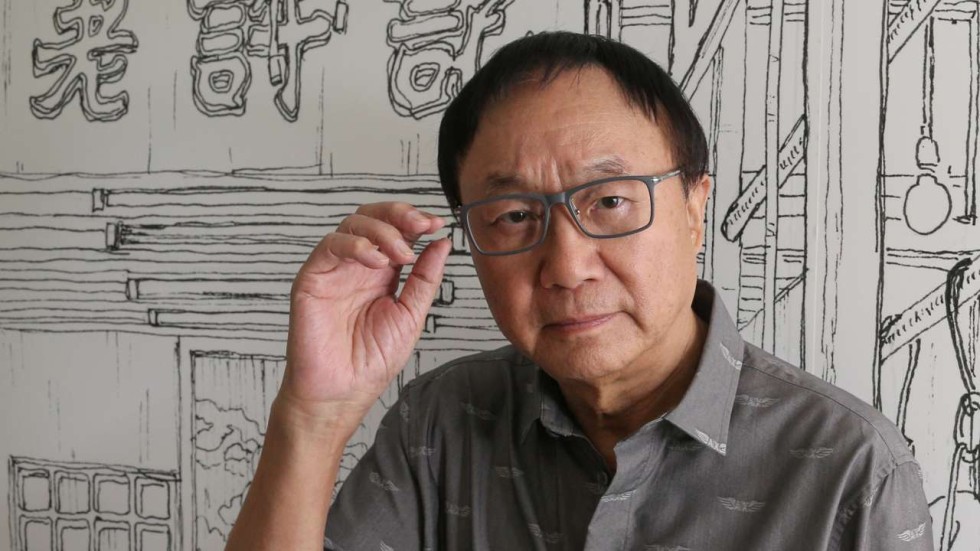
Michael Hui in the office of his production company in Causeway Bay.


After being nominated as best director in Taipei’s prestigious Golden Horse Awards for his 1978 film The Contract, Michael Hui Koon-man thought it was going to become a habit. After all, he had just co-scripted, directed and starred in the now-classic The Last Message (1975) and The Private Eyes (1976), and would go on to cement his place as a Hong Kong comedy legend within a decade.

But for the longest time it seemed that lightning was not going to strike twice.

“I remember that when I was nominated 38 years ago, I thought a nomination would follow every year afterwards,” says the 74-year-old, who was finally nominated again – this time as best actor – for his leading role in the Taiwanese film Godspeed. “If they were to give me the prize this time, it’d be because they thought I didn’t have another 38 years to wait – it would be for humanitarian reasons.”

Michael Hui Koon-man on the red carpet at the 53rd Golden Horse Awards in Taipei, Taiwan in 2016. Photo: Reuters

The cruellest part of the experience for Hui is that – despite heading into the November 26 awards ceremony as favourite for the best leading actor prize – he didn’t win this one, either.

Ironically, missing out on the top honour probably suited Hui just fine: during our 45-minute chat, he shows repeated glimpses of the perfectionism that has made him a solitary artist and one who seldom feels his work is good enough.

Michael Hui as a Hong Kong native who has had a hard time since moving to Taiwan in the film Godspeed.

It’s reasonable to think Hui might have put some of his pent-up frustration into his character in director Chung Mong-hong’s engrossing Godspeed – part road movie, part violent crime drama. In the film, Hui brings his funny Hong Kong accent to the role of Old Hui, a Hongkonger who has struggled to make ends meet since moving to Taiwan 25 years earlier.

Coldly received by his family, Hui spends his days and nights driving an old taxi around Taipei to save money for retirement. Everything changes one morning when he chances upon a drug mule (played by Na Dow) who needs to travel to the south of Taiwan to deliver a package. The long and winding journey eventually renews in the unlikely pair a much-needed sense of hope – an element Hui considers essential for any filmmaker with a story to tell.

The Hui brothers (from left), Sam Hui Koon-kit, Ricky Hui Koon-ying and Michael Hui Koon-man

“The reason I haven’t made many films in recent years is because I haven’t encountered any good scripts,” he says. “This one is excellent, so it took me no time at all to accept the part. I hope the Hong Kong audience will find it refreshing to see me in this film, because I haven’t acted in this way before. I was used to exaggerating my body language and my dialogue, but there’s none of that here.”

Born in Guangzhou, Hui moved with his family to Hong Kong in 1950 and first hit the big time when he co-hosted the early 1970s TV comedy variety programme The Hui Brothers Show with his younger brother, the pop singer Sam Hui Koon-kit.


Run Run Shaw (left) shakes hands with Michael Hui at a press conference in Kowloon in 1972

The elder Hui made his film debut in Li Han-hsiang’s The Warlord (1972), and went on to appear in several more films directed by Li, although it was the box office hits he scripted, directed and starred in alongside his brothers – Sam and Ricky Hui Koon-ying – that established him as one of the biggest stars of the ’70s and ’80s, not only in Hong Kong, but also Japan, Taiwan and across Southeast Asia.

Before Godspeed, Hui’s only prominent screen roles in the past decade had been in the mediocre comedies Robin-B-Hood (2006), The Bounty (2012) and Delete My Love (2014). He hasn’t directed a film since 1992’s The Magic Touch, which he made with popular comic Dayo Wong Tze-wah, and the writer-director-actor admits frankly that persistent doubts about his ability prevent him returning to directing.

“The reason I hadn’t directed since The Magic Touch was because I’m not satisfied with myself,” says Hui. “I’m not satisfied with The Magic Touch, either. And I thought to myself, if I couldn’t come up with something new, I should hide myself deep in the mountains. I should only make a film when I have something worthwhile to say; otherwise, what’s the point?”

Michael Hui (right) as a taxi driver who inadvertently walks into some unusual situations in Godspeed.

What Hui envisioned as “a little down time to think” has now spanned more than two decades, during which time he relentlessly tried to write the one story that would live up to his impossible standards. More than a dozen original comedy screenplays now line his bookshelves, waiting to be brought to life to entertain the public.

“I’ve written a lot of scripts that I thought were good,” he says. “Usually I’d write as soon as I got the creative impulse. Then I’d put them away – I’d go fishing or travelling – and later come back to look again and see if the spark is still there. If it isn’t, it means the script isn’t working.”

The collection of finished work has caught his wife’s attention. “Once in a while, she’d come and say, ‘This stack [of screenplays] is your life, wasted. It’s becoming the past and you don’t have much time left.’ I asked why, and she said, ‘Because people get old. How do you know the scripts aren’t working?’ And I don’t know, to be honest, because I’m the one who writes, directs and stars in my films. There’s nobody to give me opinions.”

Hui is hopeful he will start shooting his next directorial effort this year. “I don’t really like to act, but it’s not up to me. The jokes have a lot to do with timing; they won’t work if an actor turns around a second too late. So I’m sometimes forced to take up a part in my own film.”

Although he hasn’t yet given the comedy project a title, Hui is adamant his upcoming films, like Godspeed, will be optimistic. “This film is especially for Hong Kong, where everyone is so grim nowadays,” he says.

“Why don’t I make anything other than comedy? Because the world is sad enough, and there’s no need for me to remind people of that. Some filmmakers like to reflect on how cruel the world is, which leaves me wondering: why do you feel the need to reflect that [when it’s so obvious already]? It’s our everyday life.”

Nevertheless, Hui says a question he always asks himself to ensure a film’s universality is: “Would it sell in Congo? Like Security Unlimited, you can show it to a Japanese audience or an African audience and it’ll still work anywhere,” he says of the film that won him the best actor prize at the first Hong Kong Film Awards in 1982.

Hui understands that his early brand of Hong Kong-centric social satire is irrelevant today because “after 1997, it’s not about Hong Kong cinema any more”, he says. “Hong Kong is now part of China and, in the future, there’ll only be ‘Chinese films’ – and not any distinction between mainland productions and Hong Kong productions. It’s just like you wouldn’t differentiate American films between those made in New York and California.”

Why, then, have we rarely seen him in any notable Hong Kong-China co-productions in the past decade?

“Because it’s not really my…” Hui trails off and then starts again. “I only care about the script. I don’t care where it’s from. Why haven’t I [done any]? First, because I’m not familiar with the China market. It’s very hard for me to write [for it]. I wrote several stories but threw them away. And I don’t want to superficially write about something that I don’t understand, with the intention to [pretend that I do].

“I’ve had several offers [to act], but they’re not like Godspeed, which I find really meaningful in the ways it echoes my personal sentiments. I’m not quite interested in those other offers. At this stage, I’d rather just enjoy life; actually, filmmaking is part of my way to enjoy life. If I were to make a pointless comedy that says nothing after all the laughs, even if it does well at the box office – don’t waste my time.”

Hui looks extremely lively for a 74-year-old, but has he given any thought to real retirement? “I retired a very long time ago,” he protests, with a laugh. “The fact is that I retired 20, or maybe 30, years ago. But when people ask me about my favourite activities in my retired life, I still tell them that I like diving, fishing and making films. So that’s what I’m doing.”

Godspeed opens on January 5.

Friday, January 17, 2014

News Article: TVB launches pay-to-watch internet television service

The below article actually came out earlier in the week, I just didn’t have time to actually post about it until now. 

On 1/14, TVB officially launched GOTV, which allows audiences in HK to view TVB series on mobile devices as well as the Internet.  As the article states, the service will be on a ‘paid subscription’ basis (similar to Netflix) whereby users will pay a monthly fee and be able to view as many TVB series as they want.

When I first heard of this service a few months ago (TVB has been talking about it for awhile), my first concern was what the ‘library’ would look like in terms of which series would be available to watch.  As we all know, TVB’s series have really gone downhill in recent years and many of their series nowadays are not worth watching at all – so if the majority of the series available would be the recent ones (i.e. the ones made after 2000), then this service would definitely not be worth subscribing to.  However, if the older series are in there – especially the ‘classics’ from the 70s/80s/early 90s eras, then yes, this service will be absolutely valuable, as it will give audiences a chance to watch those older series that are very hard to find anywhere else nowadays.

I actually went in to check out the library of series being offered and am happy to report that it looks like many of the older series will be in there!  I chose the ‘By Year’ option and in browsing through the list, I saw that there are quite a few series in there from the 70s, 80s, and early 90s that will be made available.  Right now, most of the series that are actually uploaded are recent series (not surprisingly), but at least the ‘shells’ for the older series are in there already, which means that it is just a matter of time before those get uploaded (looks like TVB is taking the gradual approach with this project and uploading a portion of the series to test the system out first).  

With all that said however, it doesn’t look like all the series TVB ever produced will be in there, at least not initially.  The current library consists of 341 series according to the article, which actually isn’t a lot at all considering how many series TVB has produced over the past 46 years (just as a point of reference – based on my calculations, the number of series TVB has produced over the past 4 decades is way over 1000).  I’m not sure what ‘criteria’ TVB is using to determine which series should be added and at what time, but hopefully it will get to a point where everything is available (though my guess is that this probably won’t happen until a few years down the road).

The other thing I noticed when browsing is that TVB also has many of their TV-movies in there as well (TVB produced A LOT of those back in the 80s/90s and many of them were just as good as their regular series) – this is definitely a good move, as I’m sure many of today’s audiences haven’t seen a lot of the TV-movies that were produced back then.  The only other thing I wish this service had was a section for variety shows and specialty programs, as those programs are truly hard to find nowadays and are absolutely a valuable piece of TVB as well as HK entertainment history.  Perhaps later on down the road, once this service is more established, they might decide to add this feature…but for now, the series and TV-movies are good enough.

Personally, I’m quite excited about this service!  Sure, I’ve seen majority of the older series (from the 70s/80s/90s) and already own most of them either on video tape or DVD, but there are quite a few that I haven’t watched in a long time and would like to re-watch – this service definitely makes it easier to do so.  Most importantly though, this service gives today’s audiences a chance to experience what ‘quality series’ is truly about and finally understand why many of us TVB old-timers continue to speak so fondly of the ‘golden era’ of TVB.  As many of us have reiterated over and over again, the series from back in the days were definitely way better produced than today’s series in almost all aspects (i.e. script, casting, acting, production values, etc.), but since the older series are so hard to find nowadays, audiences couldn’t really watch them even if they wanted to.  With GOTV, audiences now have that chance to watch!

I actually haven’t had the chance to ‘explore’ the GOTV service in depth yet, so can’t really speak to the mechanics of the service and whether it truly does what it claims.  I also don’t know how the picture quality of the series will be, especially with the older series – I’m pretty sure it won’t be in HD, but that’s ok…even if it’s old video tape quality, that’s still better than nothing.   

.*****

TVB launches pay-to-watch internet television service

Source:  SCMP


The battle between Hong Kong Television Network and its rival Television Broadcasts Ltd intensified on Tuesday after TVB launched a pay-to-watch internet service that allows subscribers to watch dramas it has produced since it was founded in 1967.
The launch came as HKTV was preparing for the July launch of its mobile TV service, which viewers will also be able to watch through internet-connected devices.
But TVB general manager Cheong Shin-keong said its new service GOTV, was not started deliberately to steal business from Ricky Wong Wai-kay’s service, which he is launching after being denied a free-to-air licence.
“We have been planning this for two years…and we are launching pay-to-watch services, not free TV. The timing of the matter may give you this idea, but the truth is that it is not,” Cheong said yesterday.
But he admitted GOTV would be in “indirect competition” with HKTV.
TVB is charging subscribers HK$59 a month, or HK$499 a year.
Initially, the subscriptions will give audiences access to about 341 dramas –10,000 episodes in total – on their smartphones, tablets, or computers.
TVB plans to put more dramas into the service gradually.
Cheong said he hoped 100,000 people would have subscribed to the service by the end of the year. He did not reveal how much had been invested, but he believed it would take only one to two years to break even.
He said about a million Hongkongers had subscribed to pay TV channels such as i-Cable and Now TV and he hoped that the number of GOTV subscribers “will not be embarrassing” in a few years’ time.
“We are not competing against (HKTV) directly. But we are competing indirectly in the way that we are all fighting for the audience’s time,” Cheong said.
TVB said earlier that it would terminate the leasing of six transmission stations to China Mobile Hong Kong, which HKTV bought last month to air its programmes.
The broadcaster has cited legal uncertainties arising from China Mobile’s ongoing checks into the acquisition of its subsidiary to see if it violated mainland rules.
Cheong said yesterday that TVB had already sent a letter to HKTV to request a meeting on this matter, but had not received a reply.
The government rejected HKTV’s application for a free-to-air television licence several months ago. Then last month, it announced that it would be launching TV services through the internet from July 1.
It will be offering content on three to five channels. At least one of the channels to be offered from July will be a 24-hour news channel. The content of the rest is yet to be decided, but most will be free, except video-on-demand services.
Francis Fong Po-kiu, president of the Information Technology Federation, said that GOTV would pose a challenge to HKTV. The extent of the impact would be determined by the quality of the programmes offered.
“It depends on whether HKTV can keep the quality of its programmes in the future,” he said.
Fong also said that GOTV’s subscription price was reasonable. It should be able to attract a group of people who could not afford the time to watch television when the dramas were broadcast, but wanted to watch them when they had the time.

Thursday, November 7, 2013

Article: Hong Kong dramas dethroned

Very interesting article that I happened to come across earlier today.  I’m actually not familiar with this particular Media site, but from what I can tell, it’s a Mainland news outlet, so the articles will undoubtedly have a Mainland spin to them.

In any case, I decided to share this article because it actually highlights the same sentiment that I’ve had towards the HK television industry for the past 15 years or so.  Most people probably know that I’ve been ‘following’ the HK television industry (and the entire entertainment scene as a whole) since the 1980s era and my parents have been ‘following’ since the 1960s, so collectively, we share several decades worth of ‘investment’ in the industry.  So of course, it goes without saying that having to watch the industry deteriorate the way it has the past 15-20 years has definitely been painful and heartbreaking.   I don’t mean to sound pessimistic, as it definitely hasn’t been all bad and no good – but unfortunately, the ‘bad’ has outweighed the ‘good’ for many years already and it has gotten to the point where it’s hard not to lose hope (especially with the recent events surrounding the free TV license controversy). 

Some people have asked me why I even bother with the HK entertainment industry anymore, especially given how badly it has deteriorated and how disappointed I have become towards it nowadays.  Well, it’s hard to give a simple answer, since there are a boatload of reasons why I’m still so concerned about the industry (and listing them all out will probably take forever) – but one reason I will state is that, even though the industry might be ‘dying a slow death’ in my eyes, the fact of the matter is that it’s still not ‘dead’ yet.  There are still people in the industry I care greatly about (artists I grew up watching for example) and as long as those people continue to exist, I will continue to ‘follow’ the industry (albeit not as ‘closely’ as I used to). 

And of course, there are always the memories of the ‘good old days’ -- that ‘golden era’ when the industry was flourishing and all aspects of the HK entertainment world (TV, music, movies, etc.) were worth experiencing.   Back then, the TV programs were better, the movies were better, the music was better, the people were better – everything all around was better!   Sometimes, when I feel particularly frustrated or disappointed with the industry and am to the point where I want to give up, those memories of ‘how it used to be’ come flowing back and it restores my hope just a little.  Yes, you can say that it’s a ‘coping mechanism’ for me, but hey, if it works, why not?

Anyway, for those fellow HK television fans reading this article – try not to get too depressed after reading it….after all, it’s just entertainment, right?

*****

Hong Kong dramas dethroned

Source:  The Global Times


Scenes from Hong Kong TV's heyday (from top): The Legend of the Condor HeroesAt the Threshold of an Era and The Legendary Fok


The Hong Kong TV industry has been in the news not for its popularity but rather its decline. Hong Kong's TV dramas have long been a symbol of Hong Kong's culture and economic prosperity. From the 1960s on, the industry enjoyed four decades of sizzling stars and innovative ideas promoted by Hong Kong TV stations like Television Broadcasts (TVB). The industry stood as a standard for all of Asia.

Yet, all these are now statements in the past tense. Along with the dwindling viewership, various critics are mourning the fall of the Hong Kong TV industry.  


The glory days

Like its economic development, the TV industry in Hong Kong experienced a golden age in the 1980s. Asia Television (ATV) and TVB are the two biggest and most widely-known free-to-watch stations in Hong Kong. The two dominated the market after Commercial Television (CTV) shuttered in 1978.

Founded in 1957, ATV is the longest-established TV station among the three. TVB was founded in 1967 by Hong Kong media mogul Run Run Shaw. Fierce competition between the two allowed the industry to flourish.  

Immigrating to Hong Kong with his whole family in the early 1980s, Li Zhi (pseudonym), like many Hong Kong citizens, grew up watching local programs. Every evening as a child, he would sit in front of the TV with his parents and switch on TVB Jade. 

Li can still recall some of the scenes from the 1981 version of Legendary Fok, a 20-episode drama produced by ATV. 

They would curse a little bit whenever there was a hokey plot in the soap operas.

"When we first moved to Hong Kong, we watched ATV more. There were not many choices then, but many of the dramas produced by the two TV stations were very good," Li said.

Compared with the dull, poorly-produced works of the Chinese mainland then, shows from Hong Kong sparkled and were widely watched, especially by young people. For example, the 1983 version of The Legend of the Condor Heroes is still a good memory for many Chinese mainland audiences now in their 30s and 40s.

A number of talented actors and actresses were brought up during this time as well. Household names like Chow Yun-Fat, Carina Lau and Andy Lau were all being trained at that time. These stars later contributed a great deal to the Hong Kong TV and film industry.


Hackneyed and forsaken

The glory days lasted until the 1990s, though there were already signs of decline in the late 1980s and early 1990s.

"You can see from the statistics, the audience rating of Hong Kong TV programs keeps going downhill from the late 1980s on," Anthony Y. H. Fung, director of the School of Journalism and Communication at the Chinese University of Hong Kong, told The Time Weekly. 

But the dwindling appeal really became apparent a decade or so ago, when South Korean and Taiwanese dramas swept the Chinese mainland.

In research conducted by Hong Kong's Office of the Communications Authority earlier this year, ATV was criticized for too often broadcasting reruns of old dramas and biased news reports.

Li's first reaction to this buzz around ATV was, "Is there anyone who still watches?"

TVB has been condemned for formulaic dramas. Some netizens deride the so-called "TVB styles." For example, lines like, "As a human, the most important thing is to be happy," and "Why not have some noodle?" were once heartwarming in the old days, but after being widely used for several decades, they have become jokes.  

"TV markets around the world are shrinking, except for the places where the Chinese are living, because the Chinese love to watch TV dramas," Chow Yuk-ming, a renowned scriptwriter who worked at TVB for nearly 20 years, told The Time Weekly. "The frequent turnover at ATV made TVB the monopoly over the recent two decades. [In a market with little competition,] quality is guaranteed to go down." 

Chow has created a number of TV dramas with both high ratings and critical acclaim, such as Cold Blood Warm Heart (1996) and At the Threshold of an Era (1999).

In 2012, he left TVB and moved north to the Chinese mainland with a number of others in the TV industry, though he said there was "no special reason." 

"I wanted a change in my working environment," he said.

TVB is not only losing its drama makers, but its stars as well. The mainland TV industry is attracting numbers of Hong Kong actors and actresses.

As The Time Weekly described, TVB is facing the biggest shortage of stars in 40 years.


Effect on the film industry

The downfall of Hong Kong TV was accompanied almost simultaneously by an ebb in the film industry.

Li Qing (pseudonym), a student at the Hong Kong Academy for Performing Arts, told The Time Weekly that though 90 percent of the academy's students ultimately go into the film industry, they all know TV and film industries have their ups and downs. 

Looking back over the past 40 years, it is not difficult to see the supporting function Hong Kong's TV industry has played for its film industry.

"Almost all the scriptwriters and directors of the early Hong Kong film industry came from TV," Fung said. "Therefore the death of the TV industry indicates an end to the film industry."

While many of the veterans move northward, it is difficult for young beginners to follow the same way, Li added.

"The best way to train the young people is with the TV shows," Li said. "A film cannot provide the same work experience." 

Thursday, January 19, 2012

My ‘TVB Rant’ # 16: The 2012 HK Television Wars – What TVB Can Learn From Past History (the 1970s TV Wars)

2012 will definitely be an interesting year for the Hong Kong television industry, as there are some major changes coming down the pike that are sure to change the landscape of the entire HK entertainment industry for years to come.

What are those changes? Well, those who have been following HK entertainment closely (or even somewhat closely) should be aware that the HK government has agreed to issuing 3 additional free-to-air television licenses this year. Currently, there are only 2 free-to-air TV stations in HK – TVB (無綫電視) and ATV (亞洲電視) – so the granting of additional licenses means that starting this year, there will be 3 additional TV stations that will be giving TVB and ATV (mostly TVB, since ATV is pretty much non-existent now) a run for its money. In layman’s terms, this means that TVB’s 30+ plus year monopoly on the HK television industry will FINALLY be broken (more on this later).

Before I talk about the impact that these 3 stations will have, it’s only fitting that I first outline for readers who these new ‘players’ will be (plus I refer to them throughout the rest of this post, so it makes sense to understand who they are).

.***.

Here’s a brief introduction of the 3 companies that have applied for free-to-air licenses:

.-- First, there’s City Telecom (CTI), which is owned by HK businessman Ricky Wong (王維基). CTI is a telecommunications company that was established in HK in 1992 (according to Wikipedia, CTI is also a major broadband internet provider in HK and has more than 3000 employees working for them). To be honest, I don’t care all that much about the telecommunications part of the company, since I’ve never been a ‘tech’ person and all the IT talk goes way above my head anyway. For the purposes of this post, the interesting thing to know about CTI is that the company’s co-founder and chairman Ricky Wong has been in the news a lot this past year and is now probably more ‘famous’ than his company (kind of funny and ironic at the same time).

Those of you who follow HK entertainment closely will probably remember Ricky Wong’s name from his 2 week stint as ATV’s new chief executive back in 2008 (that’s actually how I first learned about him – prior to that, I had no clue who he was since I don’t live in HK and therefore am not familiar with the telecommunications companies in the territory). And many of you may remember his famous ‘exclusive’ interview with TVB’s former GM Stephen Chan (not once, but TWICE – he was interviewed by Stephen Chan both on his regular “Be My Guest” program as well as on the stage production of the show). I won’t go into detail about either incident, since it’s not relevant to this post -- but I will say that ever since that time, I’ve always felt that there was a bit of ‘controversy’ concerning Mr. Wong and so I never really had a good impression of him. Then last year, when he aggressively and actively ‘poached’ many of TVB’s employees and artists while they were still working for TVB (by sending mass text messages and offering large sums of money to recruit them), I had an even worse impression of him. With that said though, I don’t doubt that he is a smart businessman and so far, based on interviews and such, it sounds like he has definitely done his research (making note of TVB’s woes and widespread problems within the company) and is taking advantage of TVB’s recent struggles to build up his own TV empire.

The latest bit of news is that CTI has already recruited dozens of former TVB artists and behind the scenes personnel – they will start filming series in March with anticipated air dates for the series in September / October. Also, Mr. Wong revealed that his company is finishing up building a studio in Tseung Kwan O and once it’s completed, that’s where all of his series will be filmed (no, you didn’t read it wrong – he’s building a studio in Tseung Kwan O, which is where TVB City is currently located…so in essence, he’s building his studio in TVB’s backyard – wow, talk about ‘in your face’ competition…LOL!!).


.—The other ‘player’ coming into the game this year is Fantastic Television, which is owned by i-Cable Communications. I-Cable is a long-time cable operator offering subscription-based programming in HK and has pretty much been in existence since the 1950s. I will be honest and say that I don’t know a whole lot about i-Cable, since I’ve never really been interested in any of its programs (except for a few select ones that I tune into occasionally) – my knowledge of the station is pretty much limited to the information that I’ve read here and there in various sources (though I’m somewhat familiar with some of the program hosts at i-Cable).

In terms of its role in the free-to-air TV realm, I actually don’t have a whole lot of confidence in i-Cable, as the company doesn’t even produce TV series currently (its focus is mainly on news, sports, and entertainment / variety programs) and my understanding is that they function very similar to the cable companies in the U.S. in that they sell various channels and services to subscribers via a ‘packaged’ plan (though not sure if it’s going to operate the same way for its free TV channel). Also, out of all 3 companies that have applied for licenses, i-Cable has definitely been the least vocal in terms of revealing what its plans are once it receives its license (I personally have not heard much about the company recruiting artists or other employees or when they will start filming series). I guess we will pretty much have to take a ‘wait and see’ approach with them…


.—The 3rd company that has applied for a free-to-air TV license is HK Television Entertainment Company (HKTVE), which is owned by telecommunications company PCCW. Coincidentally, PCCW also owns HK’s other popular pay-TV service provider, Now TV. Though Now TV is also a subscription-based cable operator, the difference is that subscribers pay based on individual channels rather than pre-packaged deals – plus there is more of a variety in Now TV programming, as they currently have the most channels of any pay TV provider in HK and many of their channels span the international realm.

Honestly speaking, if I had to pick between the 3 stations, I would actually pick Now TV (PCCW / HKTVE) as the most promising in terms of the free-to-air market, as it has a strong foundation currently with its programming (they already have some awesome interview programs and other informational shows that I enjoy watching). Also, don’t forget that Now TV has someone on their management team who has lots of experience and also pretty high status in the TV world – TVB’s former executive director of variety and special programs, Ho Lai Chuen (何麗全) – he joined Now TV last year and has pretty much become ‘top brass’ over there. Also, Ho Lai Chuen is VERY familiar with how TVB operates, as he worked for that company for close to 30 years before ‘jumping ship’ to Now TV – so in that sense, he not only has high standing in the TV industry, he has also established strong ties with many current and former TVB artists – which means that from a ‘recruiting’ standpoint, he’s definitely at an advantage. The reason I would pick Ho Lai Chuen over Ricky Wong is because so far, he has not done the ‘poaching’ thing like Mr. Wong has – instead, Mr Ho already stated that he will only seek out artists that have already left TVB and won’t purposefully ‘poach’ its employees.

Indeed, Ho Lai Chuen actually has some strong ‘supporters’ in his corner, as it is known that former TVB actors Bowie Lam and Wong Hei have already signed with his company (both had ‘fall-outs’ with TVB and ended their contracts). In addition, TVB’s 2 ‘golden producers’ – husband and wife duo Lau Kar Ho and Mui Siu Ching – have already signed with Mr. Ho’s company as well (both submitted their resignations to TVB a few months ago and will be leaving in February this year).

.***.

Ok, so now that everyone is familiar with the new stations, let’s go back to the original topic at hand…

The addition of 3 new TV stations will definitely mean a huge change for the HK television industry, which has pretty much been dominated by 1 television station (TVB) for decades. What does this change mean for audiences? Well, first and foremost, it means that FINALLY, audiences will have options – meaning Hong Kongers will have the freedom to decide which station’s programs to watch. No longer will audiences be limited to watching crappy programs that they don’t want to watch but still do anyway because there is nothing else out there. On a wider scale, HK will FINALLY be able to ‘catch up’ to other countries – HK is billed as one of the most modern, advanced nations in the world, yet when it comes to the television industry, it has been in the ‘stone ages’ for decades. I mean, come on now – which other modern nation out there still only has 1 television station for its entire population to choose from? I honestly can’t think of any!

Now, let’s look at the situation from the perspective of that ONE television station that has enjoyed a ‘monopoly’ on the HK TV industry for decades: TVB. While the addition of new TV stations is a ‘good’ thing from an audience as well as society perspective, it’s definitely a bad thing for TVB. Despite what their management may try to ‘fool’ some of us into believing -- that there are no problems with the way their company operates, that they welcome competition, that they have loyal audiences who won’t leave them no matter what, that the addition of new stations won’t impact them at all, etc. etc. etc. – the reality is that behind that façade, TVB has A LOT to worry about! (Since I sort of already went into detail about the internal problems that TVB is facing with many artists leaving and such in my previous post, I’m not going to rehash all that here).

My main issue with TVB is that as of right now, it does not appear that the company feels ‘threatened’ by the impending rise of 3 additional TV stations – it seems that they are still in ‘denial’ mode right now…I mean, how else would you explain why the company has yet to take any significant action to protect their assets? Looking at the situation from the outside (based on ‘statements’ that various TVB execs have given to the Media so far), I feel that TVB has been taking a ‘complacent’ attitude towards this whole TV war thing. Could it be that because TVB triumphed back in the 1970s (when the first TV wars took place) and have managed to dominate for the past 30 years that they feel as though history will repeat itself and they will come up on top again this time around? If that’s the case, then the management over there is tremendously short-sighted and foolish!

To understand this point, let’s go back in history to the TV war that took place back in the 70s between TVB and its 2 rival stations at that time, Commercial Television (CTV) and Rediffusion Television (RTV) [RTV is actually Asia Television (ATV)’s predecessor – the name was changed from RTV to ATV in the early 1980s].

RTV (麗的電視) was actually HK’s first TV station -- it started in May of 1957 as a pay TV station / cable operator offering various news and other entertainment programming to audiences on a subscription basis. As the territory’s first (and pretty much only) TV station at the time, RTV was able to enjoy a ‘monopoly’ of its own for close to 10 years (keep in mind that this was during a time when the television industry was just getting started in HK). Unfortunately for them, the ‘monopoly’ was short-lived because in November 1967, the territory’s second television station came into the picture: Television Broadcasts Limited (無綫電視). TVB took the region by storm pretty much because right from the start, it offered something that RTV did not have – transmission of television signals without the need for wires/cables [note that I’m not an electronics expert so I might not be using the correct tech jargon here…but I’m sure you get the picture…]. In fact, TVB’s Chinese name came about precisely because of this ‘unique’ (at the time) quality [the characters ‘無綫’ literally mean ‘no wires’] – of course, this also mean that TVB was able to offer programming for FREE, hence making it the first free-to-air television station in HK. As if that weren’t enough, TVB also started broadcasting in color almost from the getgo (RTV was still broadcasting in black and white at the time) and didn’t just offer news and variety programs, but also hit the floor running by producing and broadcasting its very first TV series in 1968. As much as I despise TVB nowadays, I have to admit that the company’s founders – Sir Run Run Shaw (邵逸夫), Lee How Wor (利孝和), and Sir Douglas Clague (祈德尊) -- were truly quite smart in the way they handled the startup of the company…it’s obvious that they did their research and so were able to target RTV’s ‘pain points’ almost immediately (unfortunately though, can’t say the same about Shaw’s wife Mona Fong or her current management crew, who have pretty much run the company into the ground this past decade!).

So where does CTV (佳藝電視) fit into all this? Well, CTV didn’t actually start up until September 1975 as the territory’s 3rd free-to-air TV station (RTV converted to free-to-air programming in 1973, so it is considered HK’s 2nd free-to-air TV station). In comparisons to the ‘intelligence’ of the TVB founders, CTV’s founders / management probably did not think things through as well because less than 3 years after it started up, the company went back bankrupt and the TV station officially closed down in August 1978 [TVB ended up buying up some of its assets]. The ironic thing is that even though CTV was the least stable television station financially, they actually had many of the most talented artists and behind-the-scenes personnel working for them at that time (most of whom joined either TVB or RTV after CTV closed down) -- as a side note, here are a few names of former CTV artists whom I’m sure readers will recognize: Michelle Yim (米雪), Lau Kong (劉江), Helen Ma (馬海倫), Yeung Chak Lam (楊澤霖), Lawrence Ng Wai Kwok (伍衛國), Teresa Mo (毛舜筠), Paul Chun (秦沛), Law Lok Lam (羅樂林), Carol ‘Dodo’ Cheng (鄭裕玲), Chun Wong (秦煌), Lau Dan (劉丹), Sharon Yeung (楊盼盼), Melvin Wong (黃錦燊).


Based on the above history, it’s obvious why TVB was able to triumph over CTV, but what about RTV (ATV)? With RTV’s ‘rich’ history of being HK’s first TV station, how did they end up with the short end of the stick so to speak and essentially allow the ‘underdog’ TVB crush them all these years? The answer: COMPLACENCY and ARROGANCE. I remember reading about how back in 1967, when TVB first came into the picture as the first free-to-air TV station in HK, the management at RTV took on a very 'complacent' attitude (since RTV was HK's first television station and had been in existence since 1957, albeit they were a cable station, not free-to-air) -- the management even gave an interview to the Media in which they basically looked down on TVB and claimed that they were not a 'formidable opponent'....having that mentality in mind, RTV not only refused to go the free-to-air route (they didn’t do so until the 1970s), they also jacked up subscription prices (stupid move) and continued to broadcast programs in black and white when TVB was already broadcasting in color (another stupid move). Of course, when RTV’s management finally ‘woke up’ and tried to turn things around in the 70s, it was already too late – TVB had already amassed a loyal following. (Since TVB was a 'free' station, it was natural for audiences to tune in when they started, even if it was just out of curiosity, to see what they would be able to do -- of course, TVB also had luck in their corner because back then, even in the late 60s/early 70s, they had the talented artists as well as the quality programs that kept audiences vested in their station). Then of course, going into the 80s, ATV didn't stand a fighting chance, since TVB was in its 'peak' era – after that, ATV continued to struggle (amidst financial woes and a seemingly endless change in management) to the point that the company is pretty much a ‘shell’ now and is rarely even mentioned nowadays. (To be honest, I actually feel that ATV may have had a chance back then if the station was better managed, especially after they converted to a free to air station -- but unfortunately, that wasn't the case....the bad management and poor business decisions made throughout the last few decades really succeeding in 'killing off' whatever potential was left).


.***.

So going back to TVB….

Interestingly enough, it looks like now, TVB's management is taking on the same 'complacent' attitude that RTV took back in the 60s/70s (or at least that's what they've been projecting to the public with all the denials about any problems existing in their company, etc.). I mean, seriously -- having been directly involved in the first television wars and seeing first-hand how their opponents ended up, you would think that TVB would have ‘taken notes’ and learned from past history NOT to follow in RTV/ATV’s footsteps. I guess what TVB doesn’t realize is that just because they won the ‘war’ back then does not mean that they will win it again now, especially given the fact that the environment is completely different now. Back then, TVB had the ‘upper hand’ because of a combination of factors – competent, effective leaders, quality programs, talented artists, etc. Nowadays, the general sentiment is that audiences are frustrated with the crappy programs that TVB has been churning out the past decade as well as the lack of talented artists that are being pushed repeatedly in our faces day after day….therefore, most audiences actually WANT to see a change -- plus audiences are smarter now in that most of us don't just blindly watch what TVB puts out, but also pay attention to what goes on behind the scenes at TVB (how artists are treated, how much they get paid, etc. etc.). Also, there's the whole Big 5 contract dispute thing as well as the Stepphen Chan corruption trial which really brought to light alot of the incompetencies at TVB....so in a sense, the tables are turned this time around and the other stations (CTI, i-Cable, now TV) actually have the 'upper hand' over TVB -- which is why those stations have a higher probability of succeeding now whereas CTV and RTV didn’t back then.

I am going to conclude by saying that as much as I ‘hate’ TVB nowadays (well, more specifically, I hate TVB’s management and politics), I can’t help but still hold out hope that the company will reform and really start taking this ‘war’ seriously – after all, I would like to think that my family and I didn’t support this station for so many decades for nothing!

Monday, January 9, 2012

News Article: Mingpao Special Feature: A career in review – looking back at TVB producer Lee Tim Sing’s Top 5 series

Here's a MUST READ article for 80s TVB fans (well, it sort of extends back to the 70s as well).

As most of you probably know, 'golden' producer Lee Tim Sing (李添勝) has plans to retire next year -- for the past 43 years, he has been responsible for producing many many TVB series, most of which we would consider 'classics'. With his anticipated retirement at the end of next year (as well as the recent success of his latest series "Bottled Passion"), Mingpao Weekly did a special feature on Lee Tim Sing, interviewing him about 5 of the top series he had produced in his career.

I'm sure that many old-school TVB fans have probably watched the 5 series discussed in this article at some point in their lives -- if so, here's some behind-the-scenes information about those series, as recounted by Tim Gor himself.

As an 80s/90s TVB fan (and the 70s to some extent), I definitely enjoyed reading this article! Whether you are a fan of TVB or not, if you've watched any of the 5 series mentioned, I hope that this article will help shed some light on things that perhaps were not previously known about the series.

Anyway, enjoy!! :-)

***********
Article originally published on January 7th, 2012

Mingpao Special Feature: A career in review – looking back at TVB producer Lee Tim Sing’s Top 5 series

Source: Mingpao Weekly, Issue 2252


Now that “Bottled Passion” has ended and his next series “Stairway to Heaven” is in post-production, TVB golden producer Lee Tim Sing (Tim Gor) has started preparing for his newest series “Detective Columbo” – actor Wayne Lai will star in this new series, which could very well be Tim Gor’s last production prior to retirement: “Unless something unexpected comes up, yes, this will most likely be the last one.” TV fans are surely hoping for something ‘unexpected’ to happen! After spending 4 decades in the industry, will Tim Gor miss the work? “It’s not really a matter of missing or not. I’m already 65 years old – it’s truly time for me to step down.”

With a career that spans 43 years and numerous hit series to his credit, Tim Gor does not wish to deliberately pick any one series as his ‘representative’ work: “I put my heart and soul into every single series I produce and each time, I strive to make the best series possible – though of course, it’s not always possible!” With limited production resources, of course it may not always be possible to achieve the best visual effects, however when it comes to choosing suitable actors and actresses for his series, Tim Gor certainly has an eye for talent. From a casting perspective, Tim Gor feels that “The Duke of Mount Deer” (1984) and “The Emissary” (1982) were ‘very close to perfection’, while classics such as “The Fate” (1981) and “The Good, the Bad, and the Ugly” (1979) had ‘golden couple’ Chow Yun Fat and Dodo (Carol) Cheng – two of his ‘beloved’ artists whom Tim Gor collaborated with often back in the day. Of course, the most ‘memorable’ experience for him was producing 1985’s grand anniversary series “The Yang’s Saga” in which every single artist employed by TVB at the time participated: “Back then, whenever we had a war to fight, everyone was invigorated!” [TN: the ‘war’ was between TVB and ATV: at that time, TVB produced the series to ‘fight’ ATV’s highly rated inaugural Miss Asia Beauty Pageant].

Looking at the state of TVB nowadays, does Tim Gor’s spirit and vitality still exist?


‘Close to perfect’ casting: Tony Leung (梁朝偉) and Andy Lau (劉德華) in “The Duke of Mount Deer” 《鹿鼎記》and “The Emissary” 《獵鷹》

In April of 1969, Lee Tim Sing joined TVB and was given the worker’s identification number of ‘365’ – perhaps it was fate that from that day forward, Tim Gor would work ‘365 days’ a year, every year, producing series for the small screen.

Having experienced the ‘golden era’ of TVB [back in the 70s, 80s, and early 90s] as a producer, it is of course difficult for Tim Gor not to lament TVB’s dire state today: “Back in the day, TVB truly had many great talents – in addition to the Five Tigers, there were also the more ‘mature’ actors such as Chow Yun Fat, Adam Cheng, Simon Yam, etc. – so in a sense, casting for series was easy!” A ‘classic’ example of this – TVB’s popular 1984 Jin Yong remake, “The Duke of Mount Deer”: “If at that time, our ‘artists vault’ did not consist of an actor named Tony Leung, the series definitely would have lost a lot of its vibrancy!” As Tim Gor describes it, Tony Leung’s portrayal of ‘Wai Siu Bo’ was akin to a ‘once in a lifetime’ opportunity – since then, the character has become ‘extinct’ so to speak: “When I had Jordan Chan (陳小春) play that role [in the 90s remake], it was a different feeling -- even Tony Leung himself, if he were to do the same role years later, would not be able to pull it off with the same freshness and purity as the original portrayal, since he would have gone through more experiences and his acting matured.”

Thinking back to that time, when TVB’s then Head of Production Lau Tin Chi (劉天賜) called Tim Gor into his office to give him the ‘marching orders’ to start production on “The Duke of Mount Deer”, Tim Gor’s first reaction was: “Ok, then Tony Leung will play Wai Siu Bo and Andy Lau will play Emperor Hong Hei!” Tim Gor revealed that the first time he cast Tony in one of his series was in 1982’s “The Emissary” – he did so primarily because Tony at that time was “a short, young boy who had a pleasant face and was obedient – the perfect fit to play Barbara Chan (陳敏兒)’s younger brother!” However, as filming of the series progressed, Tony’s meticulous acting and focus caused Tim Gor to see him in a new light: “Of course, when most audiences watch series, they will only pay attention to the main leads playing their roles in the front, but as a producer, I have to pay attention to those in the background as well. In “The Emissary”, Tony only played a supporting role and when [main leads] Andy and Barbara were playing their parts in the front, he would usually only be in the background – yet, the way he remained so focused and absorbed in the scene – it was obvious that in the future, that was the type of actor I wanted to work with; after all, who would want to work with a wandering spirit with no focus?”

Andy Lau’s situation was similar to Tony’s – the reason he got the ‘golden’ opportunity to be male lead in “The Emissary” was also because of his ‘background focus’: “In the series “The Lonely Hunter” (1981), there was a scene where a group of youth from the Acting Classes were cast as school students and had to perform the song ‘On the Songhua River’. I was in the control room and noticed that one of the students was especially enthusiastic and put 100% effort into performing that scene, so I asked my assistant to write down that student’s name. When it came time for me to start filming on “The Emissary” (in 1982), the first person that I thought about to play the lead role of a youngster from the police academy was that name I had written down: Andy Lau.”

Therefore, when it came time to film “The Duke of Mount Deer”, Tony and Andy were the first choice to play Wai Siu Bo and Emperor Hong Hei: “I would have to say that the casting for that series was close to perfection – even [veteran actor] Chun Wong playing the role of Mao Sap Bat was so well-suited!” The role that had the most ‘controversy’ at the time was Kiki Sheung playing ‘Ah Ngo’ – Tim Gor admits that back then, when he had decided to cast her in the role, there were definitely some people who objected: “As a producer, I cannot be wishy-washy – once the decision has been made, need to follow through with it. If I were to switch artists around all the time, not only would the artists themselves be unhappy, it would also affect the production. In addition to focusing on the quality of the series, I also need to be concerned with the artists’ feelings.” In deciding to cast Kiki for the role, Tim Gor states that her ‘obstinate’ personality was perfectly suited to the character: “If you say that Kiki is not pretty enough for the part, I probably wouldn’t refute you, but the character of Ah Ngo is the illegitimate daughter born out of wedlock to Chan Yuen Yuen and Lee Chi Sing and from childhood, was raised by a one-armed nun – based on her experiences, the character is supposed to have a self-determined, independent kind of stubbornness about her…Kiki definitely had this temperament that made her perfect for the role.”

In Jin Yong’s popular wuxia novels, anything is possible, however adapting the novels to the small screen is a challenge unto itself, both for the cast and crew alike. Tim Gor responds with a smile: “The scene where Wai Siu Bo finds the treasure was especially difficult to film, as there are limitations to what we are able to do in the studio. We did the best we could at the time, building a special set with an underground passage and tried to make the ‘treasure’ as realistic as we could….but of course, there will always be comparisons made! Look at all the Western films with those types of scenes – all the pillars, stones, etc. always look so grand – then take a look at ours…can’t compare!” When that scene was being filmed, Tim Gor had to give special instruction to the director to be careful with the camera angles and make the scene as short as possible: “No point in embarrassing ourselves!”

At this point in the interview, the scene in TVB’s recent anniversary series “Curse of the Royal Harem” where the Emperor and Empress are ‘riding’ in that makeshift balloon comes to mind….aiye….


Andy Lau and Deanie Ip’s mother/son relationship in “The Emissary”

In the 70s, TVB’s biggest competition was RTV [TN: Rediffusion Television, which later became ATV] and during that decade, a big focus for both stations was filming police dramas. After years of filming heavily male-oriented police investigative series, Lee Tim Sing (Tim Gor) suddenly had a thought – instead of filming regular police dramas, why not film a series about police cadets?: “Just like that, the series “The Emissary” was born!”

Prior to this series, Andy Lau did have some acting experience, however since this was his first time in a lead role, a bit of nervousness was unavoidable: “If you ask me whether Andy’s acting skills were always proficient, I would tell you ‘of course not!’ In the beginning, his acting was extremely stiff – my assistant would tell me: ‘that’s not going to work!’ to which I would reply: ‘give him a few more days and he’ll be fine!’” Tim Gor had a lot of confidence in Andy and very carefully helped him figure out where the problem was: “In times like that, you absolutely cannot yell at the actors because if you do, the situation becomes worse. Plus, at that time, it wasn’t completely Andy’s fault – during filming, there were a lot of people in the studio and it was quite noisy – unless you’re used to that type of filming environment, it’s difficult not to become slightly intimidated. As a producer, as long as you understand the circumstances, then it’s no big deal – the more at ease the artists are, the better the acting becomes. A few days later, when I bumped into Andy in the makeup room, I gave him a pat on the shoulder and told him: ‘You’ve been doing much better!’”

Of course, let’s not forget that Andy also had great ‘teachers’ to learn from, as other artists participating in the series included Deanie Ip (葉德嫻), Paul Chun (秦沛), Lau Kong (劉江), etc. – all of them were veteran artists who are known for their solid acting skills: “The veteran artists were very willing to help teach the younger artists at that time; after all, helping the younger artists was the same as helping themselves, since it meant everyone could get off work on time.” In real life, Deanie Ip and Andy Lau truly have a special ‘mother/son’ relationship and have remained close even now, 30 years later – with regard to Tim Gor’s role in bringing these two together, he states: “Actually, there really wasn’t any special reason why I decided to cast Deanie Ip in the series. My intention at the time was to create a very close-knit, unique mother/son relationship where the two of them could joke with each other and act like sister and brother rather than mother and son. I knew Deanie from years back, around 1972 or so, when I was still in an assistant (場務員) role and she was already singing in “Star Show” – later on, we got the chance to collaborate on a series – I remember that every time I saw her, I noticed that she was always smiling, so she was perfect for the ‘happy mother’ character I had in mind for “The Emissary”.”


‘Golden’ pairing of Chow Yun Fat (周潤發) and Dodo Cheng (鄭裕玲) in “The Good, the Bad, and the Ugly” 《網中人》and “The Fate” 《火鳳凰》

Talking about ‘classic’ collaborations – Tim Gor’s 1979 production “The Good, the Bad, and the Ugly” created the ‘golden’ pairing of Chow Yun Fat (Fat Jai) and Carol (Dodo) Cheng: “Chow Yun Fat’s acting skills are unquestionably great and Dodo is an actress I love collaborating with! I remember back when CTV (Commercial Television) closed down, TVB had bought a lot of that station’s series. One of my scriptwriters at the time told me I should go watch Dodo Cheng’s performance in those series – to be honest, in the past, what time would I have to check out CTV’s series?” [TN: Dodo Cheng started her television career at Commercial Television in the mid 70s – when CTV went bankrupt and TVB bought them out in 1978, she became a TVB artist].

As soon as Tim Gor saw Dodo’s performance, he knew immediately that she was a talented actress – but, how she ended up becoming part of the ‘golden pairing’ with Chow Yun Fat was partly due to fate and the right timing. As we all know, in the series “The Good, the Bad, and the Ugly”, Fat Jai was also paired up with actress Cora Miao (繆騫人) and part of the storyline revolved around which woman he would ultimately choose: “The original plan [for the storyline] was that when a man [Fat Jai’s character Cheng Wai] is faced with two women – one who is a perfect match for him in terms of background, education, and thought process and who he had once been in love with [Dodo’s character Fong Hei Mun] and the other who is his dream ‘goddess’ and who understands him well, takes care of him, and is very considerate of his thoughts and feelings [Cora’s character He Ying] – who will he ultimately choose?”

Before the writers had a chance to make a decision, fate already made the choice for ‘Cheng Wai’: “After Cora Miao resigned in the middle of filming the series, the answer was already obvious, as there was no other choice – Fat Jai will definitely be paired with Dodo in the end. Any other characters who were added as love interests after that (Susanna Au Yeung for example) were all ‘facades’ whose purpose was to ultimately bring Fat Jai and Dodo together and move their relationship forward.” Back when the series aired, TVB claimed to have received 200 letters from audiences on a daily basis complaining about ‘Cheng Wai’ being paired with a different love interest as well as requesting that he and ‘Fong Hei Mun’ reunite. When the pair did get back together in the finale, it appeared that TVB had complied with the audiences wishes, but in reality, Tim Gor already had that ending in mind long ago: “Actually, as soon as He Ying was written out of the script [the character died in a car accident], the storyline of Cheng Wai ultimately getting back together with Fong Hei Mun was already set. When Cora quit, we had to ‘give up’ a lot of the storyline that we had originally planned for her – for instance, we had written that George Lam (林子祥)’s character was originally going to fight Cheng Wai for He Ying, but in the end, his character was forced to ‘disappear’. With much of the storyline gone, there was a huge hole that we had to fill and on such short notice, it was not feasible to switch over artists who were currently filming other series, so in the end, we picked Susanna Au Yeung (歐陽佩珊).” When Tim Gor asked for Susanna’s help to participate in the series, he was very up front with her: “It was necessary to be honest from the start that her character (Au Hui Wah) was ultimately going to die – I told her that it was definitely unfair to her and I felt sorry having to wrong her like that, but since we lost Cora, we really didn’t have much choice.”

In the end, Susanna’s character is killed while trying to save Cheng Wai and his mother and later on, he gets back together with Fong Hei Mun – the series ends with the famous ‘last scene’ where Fat Jai and Dodo kiss for close to 35 seconds, which at that time, was billed as the ‘marathon kiss of the century’: “We never planned the timing of the kiss itself – my only request during filming was that the cart pushing the camera do one full circle. The cart had to be pushed slowly because if it went too fast, the cameraman would get upset – after practicing the speed a few times, we did the official take with Fat Jai and Dodo…we finished in one take.” Why not film a few more takes so that there would be more options to choose from? “Camera film was expensive in those days: it cost almost a dollar a foot, and that didn’t include printing and developing – if you film too many excess scenes, the company didn’t like it!”

The ratings for the series went through the roof and there was also much praise from the audiences. However, there were a few audiences who questioned a few aspects of the storyline: “Some people complained that it didn’t make sense for Fat Jai’s character to ruin his career and life by stealing $100,000 in order to help his mother [played by the late Tang Bik Wan (鄧碧雲)], as he could have easily borrowed that money. When I heard that complaint, I was puzzled – why would someone go borrow $100,000 from someone else for no good reason, especially considering that was the year 1979?” At the time, there were also complaints that Liu Wai Hung (廖偉雄)’s character Cheng Chan eating 30 hamburgers in one shot was unreasonable, to which Tim Gor responded: “Yes, I understand that it is difficult for an ordinary person to eat 30 hamburgers all at once, but the purpose of that scene was to show how foolish and ridiculous the character’s thought process was as well as demonstrate the concept of new immigrants wanting to try Western trends [eating a hamburger].” Indeed, the character of ‘Cheng Chan’ had a huge effect on HK audiences and even helped to coin the phrase ‘Ah Chan’ as a nickname for new immigrants settling in HK from Mainland China: “During that time, it was common for HK people to go back to visit their ancestral relatives in the villages and oftentimes, they would exaggerate how HK was a ‘land of gold’, which caused a lot of Mainlanders to come here illegally. I basically ‘borrowed’ the idea after listening to several brothers from the village tell their stories and based the character on this. As for why we chose the name ‘Ah Chan’ – well, that was due to a lot of the stereotypical nicknames that were prevalent in our old society.”

While “The Good, the Bad, and the Ugly” reflected the struggles of ordinary citizens trying to survive everyday life, Tim Gor’s series “The Fate”《火鳳凰》reflected a different type of struggle – one on a more psychological and emotional level involving the upper eschelons of society. Once again, Chow Yun Fat and Dodo Cheng were paired together – was this arranged by the company given the couple’s popularity from earlier? “No – the most important thing for me is the character and how suited the artist is to portray the role. The main character in “The Fate” is the adopted son of a former triad king and starting from the first scene, there are already scenes involving his background – when it comes to portraying ‘grassroots’ characters, Fat Jai definitely has a knack for it!”

Dodo’s character in the series is the daughter of a rich lawyer, so in order to emphasize the importance of her family’s background, Tim Gor specially purchased a real leather sofa worth ten thousand dollars (remember, this is back in 1981) to use as part of the setting for the scenes involving her home: “Of course, the company complained about the expense, but from my perspective, the family is affluent and in order to match the background and storyline, it made sense to have an expensive sofa – would you expect them to have a sofa made from cheap fabric in their home? Besides, I only bought that one piece of furniture!” Tim Gor was persistent, but it paid off: “Sure, I got yelled at a little, but I don’t care – as long as I’m able to put the investment to good use and it pays off, those people will stop complaining.”


Filming grand production anniversary series “The Yang’s Saga” 《楊家將》

In 1985, the ‘golden couple’ of Chow Yun Fat and Dodo Cheng was taken to a different level – both became ‘deities’! In the grand anniversary series “The Yang’s Saga”, Fat Jai played Lui Dong Bun and Dodo played Ho Sin Gu [TN: historical characters], however both roles were only cameos that they agreed to do to help the company [TVB] fight a war: “At the time, the ratings for flagship program EYT had dropped drastically (and the company had to battle ATV’s Miss Asia pageant finals) – in order to fight back, the company ordered that all their resources be utilized for a grand production and filming had to commence 10 days from the order being handed down. Back then, the organization and structure of the company was strong – as soon as the order was received, we notified the Artists department and they immediately posted letters to all the artists’ lockers letting them know to be prepared. Artists such as Fat Jai, Dodo, Maggie [Cheung] all had series that they were currently filming, so they were asked to return for 1 or 2 days only to film cameo roles as ‘deities’. The director at that time was Johnnie To (杜琪峰) and he asked me how deities were supposed to appear, as it’s not ‘realistic’ to have them just walk out – after some thought, I realized he was right. The result was that we created a precedent by utilizing 18 wires all at once to have all the deities ‘fly’ out in the first scene of the series!”

The reason why the historical story of the Yangs was chosen for this series was primarily due to the short timeframe with which the series needed to be filmed and released: “If we had done a modern series instead, we would have had to spend too much time explaining the story to audiences and promotion of the series would be too strenuous – however as soon as we say “The Yang’s Saga”, everyone already knows the story.” With the popularity of the 5 Tigers at the time, it made sense that they would be recruited to play major roles in the production: “Michael Miu, Felix Wong, Andy Lau, and Tony Leung were arranged to play the roles of the 4th, 5th, 6th, and 7th Yang brothers, all of whom carried much of the storyline – the personalities and mannerisms fit perfectly.” (Kent Tong did not participate because he was on hiatus due to Barbara Yung’s passing).

In the studio, everyone was originally in high spirits and ready to fight the battle, however after filming nonstop for a few days without any sleep, the situation became a bit volatile: “Everyone hadn’t slept for days, many people were in bad moods, and people were complaining. Johnnie To was pretty much yelling at people left and right – if the crew did their jobs quickly, then of course everything would be fine, but if they slowed down a little bit, then he would get upset and yell. At this point, I had no choice but to be the mediator and help settle things.” But Tim Gor also was filming without rest, right along with them: “Yes, but if I got upset too, we’d be dead! I had to keep the big picture into consideration.”

Tim Gor is definitely deserving of the title ‘natural born leader’!