Showing posts with label CTV 佳藝電視. Show all posts

Thursday, November 7, 2013

Article: Hong Kong dramas dethroned

Very interesting article that I happened to come across earlier today.  I’m actually not familiar with this particular Media site, but from what I can tell, it’s a Mainland news outlet, so the articles will undoubtedly have a Mainland spin to them.

In any case, I decided to share this article because it actually highlights the same sentiment that I’ve had towards the HK television industry for the past 15 years or so.  Most people probably know that I’ve been ‘following’ the HK television industry (and the entire entertainment scene as a whole) since the 1980s era and my parents have been ‘following’ since the 1960s, so collectively, we share several decades worth of ‘investment’ in the industry.  So of course, it goes without saying that having to watch the industry deteriorate the way it has the past 15-20 years has definitely been painful and heartbreaking.   I don’t mean to sound pessimistic, as it definitely hasn’t been all bad and no good – but unfortunately, the ‘bad’ has outweighed the ‘good’ for many years already and it has gotten to the point where it’s hard not to lose hope (especially with the recent events surrounding the free TV license controversy). 

Some people have asked me why I even bother with the HK entertainment industry anymore, especially given how badly it has deteriorated and how disappointed I have become towards it nowadays.  Well, it’s hard to give a simple answer, since there are a boatload of reasons why I’m still so concerned about the industry (and listing them all out will probably take forever) – but one reason I will state is that, even though the industry might be ‘dying a slow death’ in my eyes, the fact of the matter is that it’s still not ‘dead’ yet.  There are still people in the industry I care greatly about (artists I grew up watching for example) and as long as those people continue to exist, I will continue to ‘follow’ the industry (albeit not as ‘closely’ as I used to). 

And of course, there are always the memories of the ‘good old days’ -- that ‘golden era’ when the industry was flourishing and all aspects of the HK entertainment world (TV, music, movies, etc.) were worth experiencing.   Back then, the TV programs were better, the movies were better, the music was better, the people were better – everything all around was better!   Sometimes, when I feel particularly frustrated or disappointed with the industry and am to the point where I want to give up, those memories of ‘how it used to be’ come flowing back and it restores my hope just a little.  Yes, you can say that it’s a ‘coping mechanism’ for me, but hey, if it works, why not?

Anyway, for those fellow HK television fans reading this article – try not to get too depressed after reading it….after all, it’s just entertainment, right?

*****

Hong Kong dramas dethroned

Source:  The Global Times


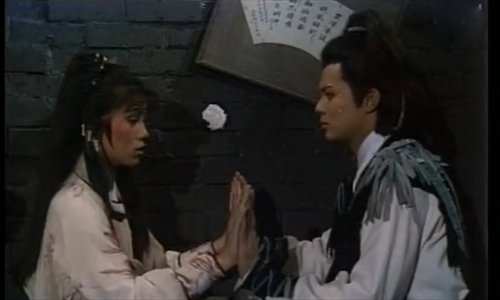
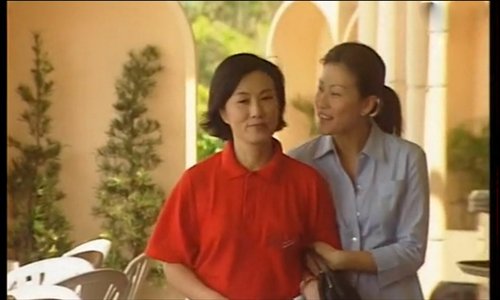
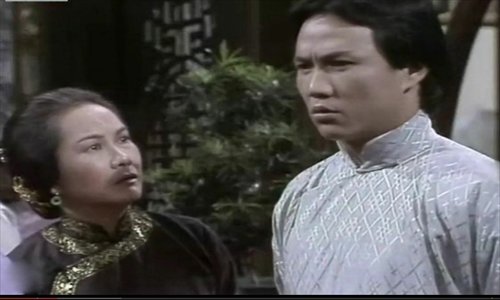
Scenes from Hong Kong TV's heyday (from top): The Legend of the Condor HeroesAt the Threshold of an Era and The Legendary Fok


The Hong Kong TV industry has been in the news not for its popularity but rather its decline. Hong Kong's TV dramas have long been a symbol of Hong Kong's culture and economic prosperity. From the 1960s on, the industry enjoyed four decades of sizzling stars and innovative ideas promoted by Hong Kong TV stations like Television Broadcasts (TVB). The industry stood as a standard for all of Asia.

Yet, all these are now statements in the past tense. Along with the dwindling viewership, various critics are mourning the fall of the Hong Kong TV industry.  


The glory days

Like its economic development, the TV industry in Hong Kong experienced a golden age in the 1980s. Asia Television (ATV) and TVB are the two biggest and most widely-known free-to-watch stations in Hong Kong. The two dominated the market after Commercial Television (CTV) shuttered in 1978.

Founded in 1957, ATV is the longest-established TV station among the three. TVB was founded in 1967 by Hong Kong media mogul Run Run Shaw. Fierce competition between the two allowed the industry to flourish.  

Immigrating to Hong Kong with his whole family in the early 1980s, Li Zhi (pseudonym), like many Hong Kong citizens, grew up watching local programs. Every evening as a child, he would sit in front of the TV with his parents and switch on TVB Jade. 

Li can still recall some of the scenes from the 1981 version of Legendary Fok, a 20-episode drama produced by ATV. 

They would curse a little bit whenever there was a hokey plot in the soap operas.

"When we first moved to Hong Kong, we watched ATV more. There were not many choices then, but many of the dramas produced by the two TV stations were very good," Li said.

Compared with the dull, poorly-produced works of the Chinese mainland then, shows from Hong Kong sparkled and were widely watched, especially by young people. For example, the 1983 version of The Legend of the Condor Heroes is still a good memory for many Chinese mainland audiences now in their 30s and 40s.

A number of talented actors and actresses were brought up during this time as well. Household names like Chow Yun-Fat, Carina Lau and Andy Lau were all being trained at that time. These stars later contributed a great deal to the Hong Kong TV and film industry.


Hackneyed and forsaken

The glory days lasted until the 1990s, though there were already signs of decline in the late 1980s and early 1990s.

"You can see from the statistics, the audience rating of Hong Kong TV programs keeps going downhill from the late 1980s on," Anthony Y. H. Fung, director of the School of Journalism and Communication at the Chinese University of Hong Kong, told The Time Weekly. 

But the dwindling appeal really became apparent a decade or so ago, when South Korean and Taiwanese dramas swept the Chinese mainland.

In research conducted by Hong Kong's Office of the Communications Authority earlier this year, ATV was criticized for too often broadcasting reruns of old dramas and biased news reports.

Li's first reaction to this buzz around ATV was, "Is there anyone who still watches?"

TVB has been condemned for formulaic dramas. Some netizens deride the so-called "TVB styles." For example, lines like, "As a human, the most important thing is to be happy," and "Why not have some noodle?" were once heartwarming in the old days, but after being widely used for several decades, they have become jokes.  

"TV markets around the world are shrinking, except for the places where the Chinese are living, because the Chinese love to watch TV dramas," Chow Yuk-ming, a renowned scriptwriter who worked at TVB for nearly 20 years, told The Time Weekly. "The frequent turnover at ATV made TVB the monopoly over the recent two decades. [In a market with little competition,] quality is guaranteed to go down." 

Chow has created a number of TV dramas with both high ratings and critical acclaim, such as Cold Blood Warm Heart (1996) and At the Threshold of an Era (1999).

In 2012, he left TVB and moved north to the Chinese mainland with a number of others in the TV industry, though he said there was "no special reason." 

"I wanted a change in my working environment," he said.

TVB is not only losing its drama makers, but its stars as well. The mainland TV industry is attracting numbers of Hong Kong actors and actresses.

As The Time Weekly described, TVB is facing the biggest shortage of stars in 40 years.


Effect on the film industry

The downfall of Hong Kong TV was accompanied almost simultaneously by an ebb in the film industry.

Li Qing (pseudonym), a student at the Hong Kong Academy for Performing Arts, told The Time Weekly that though 90 percent of the academy's students ultimately go into the film industry, they all know TV and film industries have their ups and downs. 

Looking back over the past 40 years, it is not difficult to see the supporting function Hong Kong's TV industry has played for its film industry.

"Almost all the scriptwriters and directors of the early Hong Kong film industry came from TV," Fung said. "Therefore the death of the TV industry indicates an end to the film industry."

While many of the veterans move northward, it is difficult for young beginners to follow the same way, Li added.

"The best way to train the young people is with the TV shows," Li said. "A film cannot provide the same work experience." 

Sunday, January 20, 2013

***REPOST*** Mingpao Interview with veteran actor Law Lok Lam: ‘Together at the other end of the world’

As most of you have probably noticed, I’ve been posting up quite a few articles that feature interviews with veteran TVB (or, in some cases, ‘formerly TVB’) ‘green leaf’ artists (aka ‘supporting artists’)  in the past few months.  Part of this is actually ‘intentional’ on my part because in all the years that I’ve been following HK entertainment, I’ve always felt that ‘supporting artists’ never get as much attention paid to them as leading artists do (well, by most ‘mainstream’ audiences at least), despite the incredible talent that they have.  Some of these artists toil diligently and endlessly for decades, yet are rarely ever ‘recognized’ by audiences or by the company they work for, which is truly very sad.  As I said in my earlier “tribute” post about green leaf / veteran artists (read it here), these artists are absolutely ‘essential’ to a TV series and in many cases, they are the ones who actually ‘carry’ the series from an ‘acting’ perspective.

Personally, I have a lot of respect for veteran artists, especially ‘green leaf’ ones and to be quite honest, there are many times where I would actually pay more attention to the supporting cast in a series than to the leads.  And of course, there will always be a soft spot in my heart for veteran artists whom I grew up watching back in the 80s (though many of them are no longer active in the industry nowadays).  This is one of the reasons why I decided to translate and post up so many interviews with these artists that I’ve come across in my ‘readings’, especially since many of today’s audiences may not know who these artists are and may not appreciate their talent or their contributions to the entertainment industry.  Hopefully, by doing this, I can do my part in helping to give these artists the long overdue ’15 minutes’ of exposure that they rarely get but absolutely deserve! 

With all that said, one thing I hope to do in the next couple months (hopefully if time permits) is translate and post up on my blog as many of the veteran/green leaf artist interviews as I can—both current interviews as well as older ones (believe it or not, the ones I’ve translated so far are just ‘scratching the surface’ – there are many more interviews with veteran/green leaf artists that came out in just this past year alone that I’ve been accumulating, but just didn’t get around to translating!). 

To kick things off, here’s an OLD interview from an old issue of Mingpao Weekly magazine (Issue# 2215) that was published back in April 2011 (almost 2 years ago).  I had actually translated and posted this interview on AF back then, but for some reason, forgot to post on my blog as well (can’t remember why)…anyway, this interview is with another one of my favorite veteran actors, one who is still active in TVB even today:  actor Law Lok Lam.  Those who followed HK television entertainment back in the 70s era probably remember Law Lok Lam when he used to play lead roles….but since most of us probably don’t remember back that far, I’m sure fans of TVB series from the 90s will probably remember the series Blood of Good and Evil (我本善良) [one of the best TVB series ever made in my opinion!] as well as Law Lok Lam’s critical role in that series.  Even though I’ve seen many of Law Lok Lam’s works and always enjoy his solid, versatile acting, I will say that his performance in BOGAE definitely had the biggest impact on me (partly because that series is one of my all time favorites – loved everything about that series!). 

Unfortunately though, Law Lok Lam has pretty much been relegated to playing minor roles in recent years – even though he is in a lot of series, very few of his roles have been significant or even memorable, which is absolutely a waste of his acting talent!   I sincerely hope that TVB learns to cherish their veteran artists more because these types of artists (versatile, experienced, solid actors/actresses) are very hard to come by – especially at this critical time when TVB already lost so many veteran artists (either to retirement or to rival stations) and therefore need to retain as many of these artists as they can.  Hopefully TVB 'gets the message' and does the right thing...

****

Mingpao Interview with veteran actor Law Lok Lam: ‘Together at the other end of the world’

Article originally published in April 2011

Source:  HK Channel (Original Source:  Mingpao Weekly, Issue 2215)

Translation:  llwy12


Having to die 5 times in 24 hours, this type of career can be considered a ‘tragic drama’, but it can also be considered a ‘farce’ -- netizens composed a song entitled  ''同是天涯羅樂林'' for him and also gave him the title of ‘extraordinary person’.   Veteran actor Law Lok Lam (羅樂) played the ‘first generation’ Yang Guo [TN:  the role Andy Lau made famous in Return of the Condor Heroes] in 1976, but never became popular or famous from that role. In the classic love story, Yang Guo waited for Siu Lung Nui for 16 years – a story that is at the same time inspiring yet tragic;  for Law Lok Lam, after several decades as a ‘green leaf actor’ (supporting actor), he suddenly becomes an international star – a situation that similarly evokes tears among laughter.

Law Lok Lam married at a young age and after having 2 daughters, he and his first wife divorced.  After that, he married actress Chan Po Yee (陳寶) and became famous actress Connie Chan Po Chu’s (陳寶) brother-in-law [TN:  Chan Po Yee is Connie Chan’s younger sister].  With those types of connections, Law Lok Lam could have lived a glamorous ‘star’ life, but instead, he chose a lifestyle that is both simple and unadorned – he enjoys going to the local open-air street market in Kowloon City to buy groceries and sometimes meets up with friends at a Kowloon City sushi restaurant for some drinks and chit-chat.  In fact, for this interview, he requested for the reporter to meet him in Kowloon City to chat over a meal of ox tendon noodles.  With regard to his lifestyle, Law Lok Lam expresses:  “I like ‘genuine’ -- to me, the worst thing in life is being ‘fake’.”

Whether it’s bumping into him in the street, seeing him at a local HK diner, or seeing him on TV for a ’24 hour’ timespan, Law Lok Lam indeed lives with us ‘under the same skyline’.


From a background dancer to one of director Chang Che’s core actors

Law Lok Lam was born in ChaoZhou, a prefecture in Guangdong, but immigrated to Macau in his teens.  In terms of education, he dropped out of school after his first year in high school and at the age of 14, came to Hong Kong with his family.  During those years, he worked at a plastics factory and was responsible for following the truck drivers on their trips to deliver freight.  As the only son in the family, Law Lok Lam decided to help out his father when he opened up a small travel agency a few years later, becoming a tour guide for the agency.  At the age of 23, during the last year that the Southern Drama Group (the Acting Class for Shaw Brothers artists) was in existence, he made it into the final class and studied there for 1 year.

“After I came out from the class, I was a ‘ke le fe’ (extra), pretty much just stood around and didn’t have any lines…once the stuntman finished his action sequence, I would lie down on the floor and be the corpse.”

When he first started 40 years ago, Law Lok Lam was already doing ‘death scenes’, so with his ‘expertise’ in this area, having to ‘die’ 5 times in 1 day is not unusual at all.  However, the job of an ‘extra’ was too low-paying, so luckily, he had a side job as dancer to help him earn more money.

“In the Acting Class, there was an instructor, Mrs. Ng, who taught dance – I would go with her to various dance performances, both big and small – even if most of the time, I was just part of the ‘background scenery’, I was satisfied because I was learning a lot and eventually, I became part of the dance group.  One time, director Chang Che () was filming a movie with John Chiang (姜大) and Tik Lung () as the leads – there was a scene where he needed some dancers, so our group took on the task.  The director took notice of me and wrote my name down – a few months later, Shaw Brothers’ production department called me and said that director Chang Che recommended me to sign a contract with them.  That was when my acting career officially began.”

One would think that being able to join the Shaw Brothers Company, plus being part of director Chang Che’s designated group of actors, Law Lok Lam’s career should be bright and promising, right?  Unfortunately, that wasn’t the case, as the huge production company had very precise separations when it came to position and rank.

“I was not one of Chang Che’s ‘god-sons’ – his true god-sons were John Chiang, Tik Lung, Chan Koon Tai (陳觀), Danny Lee (李修).  However I did get to participate in almost every one of Chang Che’s films, so I guess you could say that I was a ‘core member’ of his acting troupe.”

So as a ‘core member’, it would make sense that Law Lok Lam should become a ‘martial arts actor’, since Chang Che’s forte was in martial arts action films, however his case was exactly opposite, as Chang Che wanted him to focus on artistic films instead.

“The film where I had the most screentime was Young People (年輕), which I believe was Agnes Chan’s (陳美) first film – we were paired together in the film, she would play the guitar and sing while I danced.  After about 2-3 years with Shaw Brothers, I decided to leave, as my career wasn’t really going anywhere – Chang Che signed me, but didn’t use me for martial arts.  Coincidentally, at that time, there were also other directors outside who were willing to give me opportunities, so I left to shoot action films – it was pretty much after I left Chang Che that I became a martial arts actor.”


Kung Fan Hung was opposed to Law Lok Lam dating her daughter

With his heavyset features, Law Lok Lam was perfect for the martial arts action hero roles – indeed, he expressed that he has already forgotten how many action films he has done, but in most of them, the roles were mainly supporting.  In the late 1970s, he joined Commercial Television (佳藝電) and got the chance to participate in their version of Legend of the Condor Heroes (射鵰英雄), where he played one of the Senior leaders of the Beggar Clan.   After that, he was chosen by producer Hsiao Sheng () to play the role of Yang Guo in the Commercial Television version of Return of the Condor Heroes (神鵰俠) -- at the age of 28, this was the first time that Law Lok Lam got the chance to be the male lead.

The steps that life takes can be very strange – for Law Lok Lam, he first had marriage before he had a career.  At 21, he got married and not too long after that, he had 2 daughters.

“My first wife was a distant relative of my cousin’s family.  I don’t know how to explain why we got married and why we divorced – all I can say is that when fate comes, you can’t push it away and when fate is at its end, you can’t force it to stay.”

After his divorce, Law Lok Lam met actress Chan Po Yee, who had just entered Commercial Television and had already made a deep impression on audiences with her performance in Dream of the Red Chamber (紅樓夢).  Even though there was a big age difference between them, that didn’t stop them from falling deeply in love.  Chan Po Yee’s background is quite unique:  her biological parents separated when she was very little and she ended up being adopted by a neighbor -- renowned Cantonese opera star Kung Fan Hung (宮粉).  Her older sister Connie Chan [Po-Chu] was also adopted by Kung Fan Hung from a young age, however the relationship between the sisters and their adoptive mother was very close.   When Law Lok Lam and Chan Po Yee first started dating, Kung Fan Hung was opposed to their union.

“I call Kung Fan Hung ‘Mom’ and have the utmost respect for her.  At that time, it made sense that Mom would want her daughter to marry someone who was more of a match for the family in terms of status and background.  Even though I had lead roles during that time, I was still a ‘small actor’ after all, so it was natural for Mom to be opposed.  I did not purposefully try to do anything to change Mom’s view of me – as she got to know me better, she eventually saw what type of person I was.  That’s how my personality is – I hate being ‘fake’;  it’s very easy to deceive others and pretend that I’m a very good person, but to be honest, the deception won’t last long and the truth will eventually come out.  Later on, Mom ended up loving me like her son and we were all very happy together.”

Law Lok Lam calls sister-in-law Connie Chan “3rd Sister”;  even though he is brother-in-law of such a famous star, he expresses that he does not feel any pressure at all – he still takes the bus and the subway whenever he needs to go somewhere, he still goes to the street markets to buy groceries, etc. – basically, he continues to be himself and because of that he is able to live a relaxing life.

“Connie is a woman whom I respect a lot.  In my life, there are 2 ‘seniors’ [in the industry] whom I respect the most – one is ‘master of drama’ King Sir [Chung King Fai (鍾景)] and the other is 3rd Sister [Connie].   3rd sister’s absolute professionalism, her reverence toward her elders and those who once taught her – in today’s generation, it’s very hard to find these qualities.  Also, her piety and obedience toward her mother is absolutely admirable – she continued to live with Mom all these years, up until Mom passed away last year in her 90s [TN:  Kung Fan Hung passed away after she was rushed to the hospital when she fainted right before Connie’s Cantonese opera performance at HK Coliseum last year].  The piety and strength that she showed during that difficult time deeply moved me – the goodness that she shows toward others is not reliant on words alone, she truly demonstrates it through her actions.  Her fans are very loyal to her and every year, during the Lunar New Year holiday, they would bring their children and families to come give her well wishes…very amazing!”


A loner

When Commercial Television abruptly closed down in the late 1970s, Law Lok Lam was not only out of a job, he also was not able to get back the salary that he was still owed.  Luckily, almost immediately, Rediffusion Television [TN:  ATV’s predecessor] hired him – not long after that, his youngest daughter was born.  Soon, Law Lok Lam and his wife Chan Po Yee as well as their 3 daughters became a ‘celebrity family’ that would show up in the news every so often.

“Alex Man (萬梓) and I were sworn brothers, so when my youngest daughter was born, he ‘adopted’ her as a god-daughter.  Even though we were from different backgrounds – he is Hakka and I am ChaoZhao – we got along quite well and always had a lot to talk about.  Alot of people say that Alex is a very ‘explosive’ person, but I didn’t think he was too bad.”

From one of Commercial Television’s ‘siu sangs’ (male lead) to ATV ‘zong sang’ (middle-aged male lead) to TVB ‘green leaf king’ (supporting actor), Law Lok Lam admits that as he got older, he started to change.  In the past, he loved to hang out with groups of friends, going to bars, playing Mahhjong, etc. – pretty much he liked to socialize and be around people.   Now, he has become more of a ‘loner’ who enjoys going to Kowloon City in the middle of the night and having a drink or two.

“At my age, it’s not unusual at all.   I like going out by myself to study the script for the series I’m filming and prepare for the next day’s work – it’s very relaxing and I’ve never felt bored.  Actually, I do have a lot of friends in various places – at night, no matter which eatery I go to, I know almost everyone at all the tables, so I don’t feel as though I’m all alone by myself.  And for those who say that I am trying to ‘drink away my troubles’ with alcohol – well, just because I have a few drinks does not mean I’m drunk or do crazy things.  Actually, people say that my ‘alcohol disposition’ is very good  -- in my case, I’m ‘enjoying’ alcohol, not ‘abusing’ it.”

Law Lok Lam admits that he is a bit of a wine connoisseur – he enjoys drinking whiskey, red wine, and brandy the most.  Many of the things that he had once ‘obsessed’ over in his life he has been able to give up – except wine.

“I understand that the benefits of wine are very few and in fact, it does more harm than good.  But I had already given up smoking decades ago and gambling too (in the past, I would often meet up with friends and we’d go play mahjong or bet on horse racing) – the only thing left now is wine.  Don’t tell me to give up wine because if I do, then everything’s over – if one day, I eventually do give up wine as well, then that means that my body is sending me a message to stop.  Everyone needs to have a hobby – I’m in my 60s now and if I had to give up wine too, then I don’t know what else I can do.”


In a different world from his wife

With his sudden popularity, there have been rumors recently of possible trouble with Law Lok Lam’s marriage to Chan Po Yee and that they still remain together purely because of their daughter.  Though he admits that he and Po Yee have been sleeping in separate rooms for quite some time, he denies any problems with his marriage.

“Back when we were dating, of course there was a lot of passion and happiness, just like what any other young couple would experience.  But as time goes on, the passion will lessen and no matter how vigorous our love was back then, love will eventually turn into affection and affection will eventually become ordinary.  I will very honestly tell you that after so many years together, there are many aspects of our relationship that are different now – the most obvious is religion.  In the past, both of us were Buddhists – every morning, I had a ritual of getting up and cleaning out the water on the blessing altar and lighting an incense stick before going to work.  My wife is a Christian now, so with our religions being different, our circle of friends is different as well – she has her world and I have mine.”

His wife is an insurance agent now, so she has more opportunities to attend social events necessary for her work – Law Lok Lam still enjoys a simple life and keeps social events to a minimum.  His biggest ‘extracurricular activity’ is hanging out in Kowloon City – even though he and his family already moved from Kowloon City to Clearwater Bay decades ago, he still has a special place in his heart for the city and in his spare time, still goes back to the local shops and eateries there.

“A lot of people think that I still live in Kowloon City – even the local police think that I am a Kowloon City resident because they see me around so much when they’re walking their beats around the city.  Sometimes, I would go to Kowloon City two to three times a day for various things – yes, there are supermarkets everywhere, but when I go to the market, I always choose to go to the ones in Kowloon City.”

Today, prior to our interview, Law Lok Lam allowed us to follow him around so we could understand a typical day for him (on days he doesn’t have to work, that is).  First, he goes to a vegetarian restaurant for some dim sum and 2 pots of very strong tea (to ‘clean the insides’, he says), then he takes us to a local diner for a simple meal of ox tendon noodles.  If he doesn’t have to work, then he follows his routine of going to the Kowloon City street market to buy fresh groceries, after which he goes home and cooks dinner for his wife and housekeeper (domestic helper). 

“The housekeeper doesn’t know how to cook – her job is mainly to clean the house and take care of the dogs – so I usually cook for the family.  If I have to work that night, then they usually eat take out.”


Not enough money to retire

At home, he tightly guards his kitchen; at TVB, he tightly guards his supporting actor position, working hard behind the scenes without complaint or fanfare – surprisingly, television fans were still able to ‘notice’ that he had ‘died’ 5 times in 5 different TV series within 24 hours – I guess you could consider that a type of accomplishment.

“It’s the same with all jobs – the most important thing is to actually do the work. Like with this instance, if I hadn’t filmed so many series, then there wouldn’t be the ‘coincidence’  that occurred – a lot of things were meant to be.  I don’t really choose which series I participate in – to be honest, at my age, it’s not up to me to choose anyway.”

This month, Law Lok Lam has 3 series that he is filming at once – he expresses that his ‘record’ was actually filming 5 to 6 series all at once;  in fact, there have been instances where in one night, all 3 third-line series that were airing had him in it.  With so much effort that he puts into filming series, does he feel that what he is getting in return is comparable?

“For a Hong Kong artist, it’s considered comparable.  But with my career path – doing lead roles in my youth and still working hard decades later – if I were in an international arena, I would probably have several houses, cars, and even bodyguards, by now.  However in Hong Kong, I am only an ordinary person – that’s the way things work.  If I were to constantly think about that kind of stuff, I would be depressed all the time.  That’s why I don’t think about it – as long as I still have money to pay for wine and can still buy the things that I (and my family) like to eat, then it’s OK.”

It’s hard for outsiders to understand the ‘plight’ that TVB artists endure and for most (including Law Lok Lam), the ‘suffering’ is often in silence.

“Not enough sleep, filming all day and all night – this kind of procedure is definitely problematic and you won’t find it anywhere else in the world.  The physical demands of filming a series is quite high – for example, filming two series at the same time, there is a high possibility that you won’t get to sleep for 1-2 days straight.  I’m already in my 60s – occasionally, I still have to do martial arts scenes, ride horses, wear thick ancient costumes in the scalding heat, take off my costume and have water poured on me in freezing cold weather, etc.  If one day, you want to continue filming but your body is no longer able to endure it, then you know the day has come for retirement.  If you were to ask me right now whether I have enough ‘qualifications’ for retirement, I would tell you ‘no’ – I haven’t earned enough money yet.”

Law Lok Lam laughs that he has been in the industry for over 40 years already and still, he only knows how to act, but doesn’t know how to invest, and especially doesn’t know how to do business.  As for when he will be able to retire, well, he’ll have to wait and see what the Heavens arrange.


Epilogue

Law Lok Lam only has a first year high school education, however oftentimes, he is chosen to play roles of famous professionals or generals.  His performance as famous general Yuen Sai Hoi in the series In the Chamber of Bliss (蔡鍔與小鳳) received much praise – Law Lok Lam expressed that his ‘research’ for the character wasn’t reliant on reading books, but rather on his ‘drinking’ habit. 

“In the process of going out for my drinks, I actually learn a lot.  Believe it or not, a lot of highly educated professionals actually like to come out for a drink at night too, so sometimes we would drink together – I would ask them what type of a person Yuen Sai Hoi was and they would tell me a lot of stories.   I also like to drink herbal tea, so on one of my trips to Kung Wo Tong [TN:  a famous herbal tea shop in HK], I met a business person who is very knowledgeable in Chinese history, medicine, and herbs, so for my character in The Herbalist’s Manual (本草藥) for example, that’s how I did my research.”

Ever since his accomplishment of ‘dying 5 times in 24 hours’ made international news headlines, Law Lok Lam’s ‘drinking buddies’ have ‘celebrated’ by drinking the best wines with him – hopefully now, people will no longer think that he is ‘using’ alcohol to ‘drink away his troubles’ anymore.


Tuesday, October 23, 2012

News Article: Veteran TVB actor Chan Wing Chun reveals that Felix Wong signed with CTI because of him

I came across this article about veteran ‘green leaf’ actor Chan Wing Chun (another artist I grew up watching) and since interviews like this with him are very rare, I decided to share this one.


The first series that I saw of Chan Wing Chun’s was The New Adventures of Chor Lau Heung (the Michael Miu / Barbara Yung version from 1984). That was one of my favorite ancient series from back in the day and definitely a ‘classic’ MUST WATCH series for those who haven’t seen it (personally, I’ve watched this series so many times, I’ve lost count already…LOL!). The entire cast did excellent jobs with their roles, but Michael Miu and Chan Wing Chun were especially memorable in their roles as ‘Chor Lau Heung’ and ‘Wu Tiet Fa’ respectively – in fact, to this day, no matter how many times the Chor Lau Heung story is re-made, the 2 of them will always be the only ones I remember for those 2 roles!

I remember reading about the death of Chan Wing Chun’s wife on his Weibo awhile back ago and how devastated he was over it. I actually got teary-eyed when I read the post he wrote about his wife – it was obvious that he loved his wife dearly and so took her passing especially hard…..I didn’t know though that he had considered taking his own life because of it! I’m glad that everything worked out in the end and that he has some true friends in the industry who helped him through the difficult time.

Oh, and I’m glad he clarified that piece about the reason why Felix Wong decided to join CTI – my respect for Felix just went up a few more notches after reading this interview (if that’s even possible, considering how much I already loved and respect Felix prior to this…haha!). I remember awhile back ago, when I saw Felix having a conversation with Ricky Wong on Weibo about joining his company, I thought it was kind of random at the time, especially since right before that, Felix was posting about a gathering with the Celebrity Soccer Team….now, those posts finally make sense for me….

Ok, so now that the ‘real reason’ behind why Felix Wong decided to join CTI has finally been revealed, can all those Ricky Wong / CTI haters FINALLY stop bashing Felix for supposedly ‘betraying’ his mother home [TVB] and joining a rival station? THANK YOU!!!

..****..

Veteran TVB actor Chan Wing Chun reveals that Felix Wong signed with CTI because of him

Source:  HK Channel

Translation:  llwy12


If you were to search the name ‘Chan Wing Chun’ (陳榮峻) on the internet, the description of him likely to come up is that he specializes in playing sinister, ‘small potato’ type characters – however, in real life, he is the exact opposite: just like his good friend Felix Wong (黃日華), he is honest, straightforward, and very easy to talk to. Having worked at TVB for 28 years, Chan Wing Chun candidly states that in recent years, TVB has lost its ‘human interest’ element – everything has become more ‘institutionalized’ and as a result, they continue to lose more and more talent. Asked about Felix Wong signing with CTI, Chan Wing Chun took the opportunity to clear his good friend’s name: he indicated that Felix agreed to sign with CTI not because he wanted to ‘pave the way’ for his daughter to enter the industry, as had been widely rumored – in reality, Felix signed with CTI entirely because of Chan Wing Chun.

.--.

In his 28 year career at TVB, Chan Wing Chun has taken on so many ‘green leaf’ roles, most of us have lost count already -- even though he never got the chance to get to ‘first line siu sang’ level in his long career, Chan Wing Chun indicates that he does not regret the path he took. When he was young, Chan Wing Chun was actually quite good-looking, so he often got the opportunity to play young, handsome martial arts heroes in ancient series. Later on, he got typecasted into playing sinister, ‘small potato’ villain characters and as he got older, he got roles ranging from old timid men to impulsive tough guys. Asked why he decided to go into acting, he expressed that it was purely because of interest: “Before I entered the industry, I was an air conditioner mechanic – I made 2000 HKD a month with a 16 month salary…it was a pretty steady job. But I also had an interest in acting and since I didn’t have children yet at the time, I decided to give it try – it has been my career ever since.”


Laments TVB’s loss of ‘human interest’ element

Chan Wing Chun started in the industry working for [the now defunct] Commercial Television (CTV 佳藝電視) and joined TVB in 1984 when he entered their Acting Class that year. Asked how TVB has changed over the past 28 years, Chan Wing Chun stated that in the past, TVB had much more concern for human interest: “In the past, the company truly had a genuine concern for human interest – whether it was the cast working in front of the camera or the behind-the-scenes crew, everyone was very united and worked together as a team. Also, the seniors were very willing to teach their juniors and give them advice. Back then, I constantly collaborated with actors such as Michael Miu (苗僑偉), Austin Wai (惠天賜), etc. –they were never concerned that other actors might overshadow them or get in their way and were always very willing to give advice to others.” [TN: Sadly, this is very true – Chan Wing Chun isn’t the first veteran artist to talk about this kind of thing….seems that artists nowadays don’t care for advice from seniors anymore.]

Throughout the interview, Chan Wing Chun constantly talked about how good things were back in the day, so the reporter bluntly asked whether the TVB of today is ‘not good’ – towards this, he lamented: “There was more human concern back then – nowadays everything is more institutionalized. For instance, in the past, there was never the policy of requiring artists to pay a fine if they did not participate in enough ‘shows’. I could be at TVB City waiting for work, but sometimes the company doesn’t give me any work to do and then later they tell me that I didn’t have enough ‘shows’ and end up having to pay a fine!” [TN: Chan Wing Chun also isn’t the first one to complain about this ‘policy’ – it’s actually one of the reasons why many of the veteran artists left TVB…]

Chan Wing Chun expressed that he is the type of person who will fight for things that he feels are just and within reason. For instance, whenever he needs to travel outside of HK for work, the company [TVB] gives him a $10 USD per day allowance – this is something that he had to fight for: “Before, when I used to travel outside of HK for work, we never had that benefit – I had to fight for it, as I felt it was unreasonable that we would do work for the company outside and have to pay out of our own pocket. That’s why I say the company had more concern for human interest back then – they were willing to sit down and discuss these types of things with us! Compared to now [with current management], I don’t even bother bringing things like this up anymore!”

Asked about his friends in the entertainment industry, Chan Wing Chun unhesitatingly counted Felix Wong as a good friend who has helped him out a lot, both in his career and personal life: “Wah Gor [Felix] is someone I respect greatly! He constantly looks out for me and my family and always buys things for my children. I want to take this opportunity to clarify that he signed with CTI not because he wanted to pave the way for his daughter to enter the industry as people believe – in reality, he signed with CTI because of me!”

Chan Wing Chun indicated that he was part of the first batch of artists poached by CTI – when he received the phone call from them to discuss the details, he was actually in Mainland China with the Celebrity Soccer Team for a soccer tournament. Since there were a bunch of artists present at the time, he responded vaguely to the person over the phone, but Felix Wong was able to tell from his facial expression that something was going on, so Felix grabbed the phone and started negotiating the details for him with the CTI representative: “Of course, CTI grabbed the chance to invite Wah Gor to join as well – to my surprise, Wah Gor told the person: ‘Sure, but we have to finish discussing about Chan Wing Chun first!’”

He also revealed that a few days after the phone call, Felix went straight to CTI headquarters and sought out their chairman Ricky Wong to personally discuss the details: “He told Mr. Wong that as long as Chan Wing Chun is satisfied with the terms and agrees to join CTI, then he [Felix] will also join and sign a contract to film 2 series for them! I am truly very grateful to him!”


Devastated by wife’s death

With all the details worked out, Chan Wing Chun was prepared to leave TVB and join CTI -- however, in December 2010, his beloved wife unexpectedly passed away and with that, everything changed. Thinking back to his wife’s sudden passing, Chan Wing Chun’s eyes started to tear up: “My wife’s passing was very sudden and unexpected – at the time, I was so devastated that I didn’t know what to do…I had even thought about committing suicide at one point! Luckily, at the time, I had friends such as Sunny Chan (陳錦鴻), Power Chan (陳國邦), etc. who would come over and talk to me, console me. I’m also grateful to Tsang Jeh (TVB’s head of production Catherine Tsang曾勵珍) for calling me that morning to offer her condolences and helping me re-arrange my work load so I could take care of my wife’s funeral.”

This little bit of ‘human concern’ left at TVB was what caused Chan Wing Chun to make the decision to renew his contract with them: “At the time, I had thought about retiring, since I had already finished paying all the tuition for my children’s educations and didn’t have much burden financially. But my eldest son gave me some advice and in the end, I decided to renew my contract with TVB one more time.”

Even though the circumstances had changed and Chan Wing Chun ended up staying with TVB, he praised his friend Felix for being a ‘real man’ and honoring his promise: “In the end, I didn’t join CTI, but Wah Gor still kept his promise and signed a per series contract with CTI. Currently, I have another year and a half left on my TVB contract – Wah Gor told me that once my contract is up, if I want to stay, then stay but if I want to leave, then leave…it’s up to me!”

.****.

Chan Wing Chun is 57 years old. His real name is Chan Wing Kei (陳榮基) -- he started in the industry working for Commercial Television (CTV), then in 1984, he joined TVB’s Acting Class and after graduation, started working for TVB up to the present. Throughout his 28 year career at TVB, he has played numerous supporting (‘green leaf’) roles, with majority of those roles being villains. Amongst those roles, the ones that audiences are likely most familiar with include his portrayal of ‘Wu Tiet Fa’ in 1984’s The New Adventures of Chor Lau Heung 《楚留香之蝙蝠傳奇》, ‘Chuan Guan Ching’ in 1997’s The Demi-Gods and Semi-Devils 《天龍八部》, crooked cop ‘Ng Kwok Siu’ in 1996’s The Criminal Investigator 《O記實錄》, and ‘Uncle Kan’ in 2011’s Ghetto Justice 《怒火街頭》.

Thursday, January 19, 2012

My ‘TVB Rant’ # 16: The 2012 HK Television Wars – What TVB Can Learn From Past History (the 1970s TV Wars)

2012 will definitely be an interesting year for the Hong Kong television industry, as there are some major changes coming down the pike that are sure to change the landscape of the entire HK entertainment industry for years to come.

What are those changes? Well, those who have been following HK entertainment closely (or even somewhat closely) should be aware that the HK government has agreed to issuing 3 additional free-to-air television licenses this year. Currently, there are only 2 free-to-air TV stations in HK – TVB (無綫電視) and ATV (亞洲電視) – so the granting of additional licenses means that starting this year, there will be 3 additional TV stations that will be giving TVB and ATV (mostly TVB, since ATV is pretty much non-existent now) a run for its money. In layman’s terms, this means that TVB’s 30+ plus year monopoly on the HK television industry will FINALLY be broken (more on this later).

Before I talk about the impact that these 3 stations will have, it’s only fitting that I first outline for readers who these new ‘players’ will be (plus I refer to them throughout the rest of this post, so it makes sense to understand who they are).

.***.

Here’s a brief introduction of the 3 companies that have applied for free-to-air licenses:

.-- First, there’s City Telecom (CTI), which is owned by HK businessman Ricky Wong (王維基). CTI is a telecommunications company that was established in HK in 1992 (according to Wikipedia, CTI is also a major broadband internet provider in HK and has more than 3000 employees working for them). To be honest, I don’t care all that much about the telecommunications part of the company, since I’ve never been a ‘tech’ person and all the IT talk goes way above my head anyway. For the purposes of this post, the interesting thing to know about CTI is that the company’s co-founder and chairman Ricky Wong has been in the news a lot this past year and is now probably more ‘famous’ than his company (kind of funny and ironic at the same time).

Those of you who follow HK entertainment closely will probably remember Ricky Wong’s name from his 2 week stint as ATV’s new chief executive back in 2008 (that’s actually how I first learned about him – prior to that, I had no clue who he was since I don’t live in HK and therefore am not familiar with the telecommunications companies in the territory). And many of you may remember his famous ‘exclusive’ interview with TVB’s former GM Stephen Chan (not once, but TWICE – he was interviewed by Stephen Chan both on his regular “Be My Guest” program as well as on the stage production of the show). I won’t go into detail about either incident, since it’s not relevant to this post -- but I will say that ever since that time, I’ve always felt that there was a bit of ‘controversy’ concerning Mr. Wong and so I never really had a good impression of him. Then last year, when he aggressively and actively ‘poached’ many of TVB’s employees and artists while they were still working for TVB (by sending mass text messages and offering large sums of money to recruit them), I had an even worse impression of him. With that said though, I don’t doubt that he is a smart businessman and so far, based on interviews and such, it sounds like he has definitely done his research (making note of TVB’s woes and widespread problems within the company) and is taking advantage of TVB’s recent struggles to build up his own TV empire.

The latest bit of news is that CTI has already recruited dozens of former TVB artists and behind the scenes personnel – they will start filming series in March with anticipated air dates for the series in September / October. Also, Mr. Wong revealed that his company is finishing up building a studio in Tseung Kwan O and once it’s completed, that’s where all of his series will be filmed (no, you didn’t read it wrong – he’s building a studio in Tseung Kwan O, which is where TVB City is currently located…so in essence, he’s building his studio in TVB’s backyard – wow, talk about ‘in your face’ competition…LOL!!).


.—The other ‘player’ coming into the game this year is Fantastic Television, which is owned by i-Cable Communications. I-Cable is a long-time cable operator offering subscription-based programming in HK and has pretty much been in existence since the 1950s. I will be honest and say that I don’t know a whole lot about i-Cable, since I’ve never really been interested in any of its programs (except for a few select ones that I tune into occasionally) – my knowledge of the station is pretty much limited to the information that I’ve read here and there in various sources (though I’m somewhat familiar with some of the program hosts at i-Cable).

In terms of its role in the free-to-air TV realm, I actually don’t have a whole lot of confidence in i-Cable, as the company doesn’t even produce TV series currently (its focus is mainly on news, sports, and entertainment / variety programs) and my understanding is that they function very similar to the cable companies in the U.S. in that they sell various channels and services to subscribers via a ‘packaged’ plan (though not sure if it’s going to operate the same way for its free TV channel). Also, out of all 3 companies that have applied for licenses, i-Cable has definitely been the least vocal in terms of revealing what its plans are once it receives its license (I personally have not heard much about the company recruiting artists or other employees or when they will start filming series). I guess we will pretty much have to take a ‘wait and see’ approach with them…


.—The 3rd company that has applied for a free-to-air TV license is HK Television Entertainment Company (HKTVE), which is owned by telecommunications company PCCW. Coincidentally, PCCW also owns HK’s other popular pay-TV service provider, Now TV. Though Now TV is also a subscription-based cable operator, the difference is that subscribers pay based on individual channels rather than pre-packaged deals – plus there is more of a variety in Now TV programming, as they currently have the most channels of any pay TV provider in HK and many of their channels span the international realm.

Honestly speaking, if I had to pick between the 3 stations, I would actually pick Now TV (PCCW / HKTVE) as the most promising in terms of the free-to-air market, as it has a strong foundation currently with its programming (they already have some awesome interview programs and other informational shows that I enjoy watching). Also, don’t forget that Now TV has someone on their management team who has lots of experience and also pretty high status in the TV world – TVB’s former executive director of variety and special programs, Ho Lai Chuen (何麗全) – he joined Now TV last year and has pretty much become ‘top brass’ over there. Also, Ho Lai Chuen is VERY familiar with how TVB operates, as he worked for that company for close to 30 years before ‘jumping ship’ to Now TV – so in that sense, he not only has high standing in the TV industry, he has also established strong ties with many current and former TVB artists – which means that from a ‘recruiting’ standpoint, he’s definitely at an advantage. The reason I would pick Ho Lai Chuen over Ricky Wong is because so far, he has not done the ‘poaching’ thing like Mr. Wong has – instead, Mr Ho already stated that he will only seek out artists that have already left TVB and won’t purposefully ‘poach’ its employees.

Indeed, Ho Lai Chuen actually has some strong ‘supporters’ in his corner, as it is known that former TVB actors Bowie Lam and Wong Hei have already signed with his company (both had ‘fall-outs’ with TVB and ended their contracts). In addition, TVB’s 2 ‘golden producers’ – husband and wife duo Lau Kar Ho and Mui Siu Ching – have already signed with Mr. Ho’s company as well (both submitted their resignations to TVB a few months ago and will be leaving in February this year).

.***.

Ok, so now that everyone is familiar with the new stations, let’s go back to the original topic at hand…

The addition of 3 new TV stations will definitely mean a huge change for the HK television industry, which has pretty much been dominated by 1 television station (TVB) for decades. What does this change mean for audiences? Well, first and foremost, it means that FINALLY, audiences will have options – meaning Hong Kongers will have the freedom to decide which station’s programs to watch. No longer will audiences be limited to watching crappy programs that they don’t want to watch but still do anyway because there is nothing else out there. On a wider scale, HK will FINALLY be able to ‘catch up’ to other countries – HK is billed as one of the most modern, advanced nations in the world, yet when it comes to the television industry, it has been in the ‘stone ages’ for decades. I mean, come on now – which other modern nation out there still only has 1 television station for its entire population to choose from? I honestly can’t think of any!

Now, let’s look at the situation from the perspective of that ONE television station that has enjoyed a ‘monopoly’ on the HK TV industry for decades: TVB. While the addition of new TV stations is a ‘good’ thing from an audience as well as society perspective, it’s definitely a bad thing for TVB. Despite what their management may try to ‘fool’ some of us into believing -- that there are no problems with the way their company operates, that they welcome competition, that they have loyal audiences who won’t leave them no matter what, that the addition of new stations won’t impact them at all, etc. etc. etc. – the reality is that behind that façade, TVB has A LOT to worry about! (Since I sort of already went into detail about the internal problems that TVB is facing with many artists leaving and such in my previous post, I’m not going to rehash all that here).

My main issue with TVB is that as of right now, it does not appear that the company feels ‘threatened’ by the impending rise of 3 additional TV stations – it seems that they are still in ‘denial’ mode right now…I mean, how else would you explain why the company has yet to take any significant action to protect their assets? Looking at the situation from the outside (based on ‘statements’ that various TVB execs have given to the Media so far), I feel that TVB has been taking a ‘complacent’ attitude towards this whole TV war thing. Could it be that because TVB triumphed back in the 1970s (when the first TV wars took place) and have managed to dominate for the past 30 years that they feel as though history will repeat itself and they will come up on top again this time around? If that’s the case, then the management over there is tremendously short-sighted and foolish!

To understand this point, let’s go back in history to the TV war that took place back in the 70s between TVB and its 2 rival stations at that time, Commercial Television (CTV) and Rediffusion Television (RTV) [RTV is actually Asia Television (ATV)’s predecessor – the name was changed from RTV to ATV in the early 1980s].

RTV (麗的電視) was actually HK’s first TV station -- it started in May of 1957 as a pay TV station / cable operator offering various news and other entertainment programming to audiences on a subscription basis. As the territory’s first (and pretty much only) TV station at the time, RTV was able to enjoy a ‘monopoly’ of its own for close to 10 years (keep in mind that this was during a time when the television industry was just getting started in HK). Unfortunately for them, the ‘monopoly’ was short-lived because in November 1967, the territory’s second television station came into the picture: Television Broadcasts Limited (無綫電視). TVB took the region by storm pretty much because right from the start, it offered something that RTV did not have – transmission of television signals without the need for wires/cables [note that I’m not an electronics expert so I might not be using the correct tech jargon here…but I’m sure you get the picture…]. In fact, TVB’s Chinese name came about precisely because of this ‘unique’ (at the time) quality [the characters ‘無綫’ literally mean ‘no wires’] – of course, this also mean that TVB was able to offer programming for FREE, hence making it the first free-to-air television station in HK. As if that weren’t enough, TVB also started broadcasting in color almost from the getgo (RTV was still broadcasting in black and white at the time) and didn’t just offer news and variety programs, but also hit the floor running by producing and broadcasting its very first TV series in 1968. As much as I despise TVB nowadays, I have to admit that the company’s founders – Sir Run Run Shaw (邵逸夫), Lee How Wor (利孝和), and Sir Douglas Clague (祈德尊) -- were truly quite smart in the way they handled the startup of the company…it’s obvious that they did their research and so were able to target RTV’s ‘pain points’ almost immediately (unfortunately though, can’t say the same about Shaw’s wife Mona Fong or her current management crew, who have pretty much run the company into the ground this past decade!).

So where does CTV (佳藝電視) fit into all this? Well, CTV didn’t actually start up until September 1975 as the territory’s 3rd free-to-air TV station (RTV converted to free-to-air programming in 1973, so it is considered HK’s 2nd free-to-air TV station). In comparisons to the ‘intelligence’ of the TVB founders, CTV’s founders / management probably did not think things through as well because less than 3 years after it started up, the company went back bankrupt and the TV station officially closed down in August 1978 [TVB ended up buying up some of its assets]. The ironic thing is that even though CTV was the least stable television station financially, they actually had many of the most talented artists and behind-the-scenes personnel working for them at that time (most of whom joined either TVB or RTV after CTV closed down) -- as a side note, here are a few names of former CTV artists whom I’m sure readers will recognize: Michelle Yim (米雪), Lau Kong (劉江), Helen Ma (馬海倫), Yeung Chak Lam (楊澤霖), Lawrence Ng Wai Kwok (伍衛國), Teresa Mo (毛舜筠), Paul Chun (秦沛), Law Lok Lam (羅樂林), Carol ‘Dodo’ Cheng (鄭裕玲), Chun Wong (秦煌), Lau Dan (劉丹), Sharon Yeung (楊盼盼), Melvin Wong (黃錦燊).


Based on the above history, it’s obvious why TVB was able to triumph over CTV, but what about RTV (ATV)? With RTV’s ‘rich’ history of being HK’s first TV station, how did they end up with the short end of the stick so to speak and essentially allow the ‘underdog’ TVB crush them all these years? The answer: COMPLACENCY and ARROGANCE. I remember reading about how back in 1967, when TVB first came into the picture as the first free-to-air TV station in HK, the management at RTV took on a very 'complacent' attitude (since RTV was HK's first television station and had been in existence since 1957, albeit they were a cable station, not free-to-air) -- the management even gave an interview to the Media in which they basically looked down on TVB and claimed that they were not a 'formidable opponent'....having that mentality in mind, RTV not only refused to go the free-to-air route (they didn’t do so until the 1970s), they also jacked up subscription prices (stupid move) and continued to broadcast programs in black and white when TVB was already broadcasting in color (another stupid move). Of course, when RTV’s management finally ‘woke up’ and tried to turn things around in the 70s, it was already too late – TVB had already amassed a loyal following. (Since TVB was a 'free' station, it was natural for audiences to tune in when they started, even if it was just out of curiosity, to see what they would be able to do -- of course, TVB also had luck in their corner because back then, even in the late 60s/early 70s, they had the talented artists as well as the quality programs that kept audiences vested in their station). Then of course, going into the 80s, ATV didn't stand a fighting chance, since TVB was in its 'peak' era – after that, ATV continued to struggle (amidst financial woes and a seemingly endless change in management) to the point that the company is pretty much a ‘shell’ now and is rarely even mentioned nowadays. (To be honest, I actually feel that ATV may have had a chance back then if the station was better managed, especially after they converted to a free to air station -- but unfortunately, that wasn't the case....the bad management and poor business decisions made throughout the last few decades really succeeding in 'killing off' whatever potential was left).


.***.

So going back to TVB….

Interestingly enough, it looks like now, TVB's management is taking on the same 'complacent' attitude that RTV took back in the 60s/70s (or at least that's what they've been projecting to the public with all the denials about any problems existing in their company, etc.). I mean, seriously -- having been directly involved in the first television wars and seeing first-hand how their opponents ended up, you would think that TVB would have ‘taken notes’ and learned from past history NOT to follow in RTV/ATV’s footsteps. I guess what TVB doesn’t realize is that just because they won the ‘war’ back then does not mean that they will win it again now, especially given the fact that the environment is completely different now. Back then, TVB had the ‘upper hand’ because of a combination of factors – competent, effective leaders, quality programs, talented artists, etc. Nowadays, the general sentiment is that audiences are frustrated with the crappy programs that TVB has been churning out the past decade as well as the lack of talented artists that are being pushed repeatedly in our faces day after day….therefore, most audiences actually WANT to see a change -- plus audiences are smarter now in that most of us don't just blindly watch what TVB puts out, but also pay attention to what goes on behind the scenes at TVB (how artists are treated, how much they get paid, etc. etc.). Also, there's the whole Big 5 contract dispute thing as well as the Stepphen Chan corruption trial which really brought to light alot of the incompetencies at TVB....so in a sense, the tables are turned this time around and the other stations (CTI, i-Cable, now TV) actually have the 'upper hand' over TVB -- which is why those stations have a higher probability of succeeding now whereas CTV and RTV didn’t back then.

I am going to conclude by saying that as much as I ‘hate’ TVB nowadays (well, more specifically, I hate TVB’s management and politics), I can’t help but still hold out hope that the company will reform and really start taking this ‘war’ seriously – after all, I would like to think that my family and I didn’t support this station for so many decades for nothing!